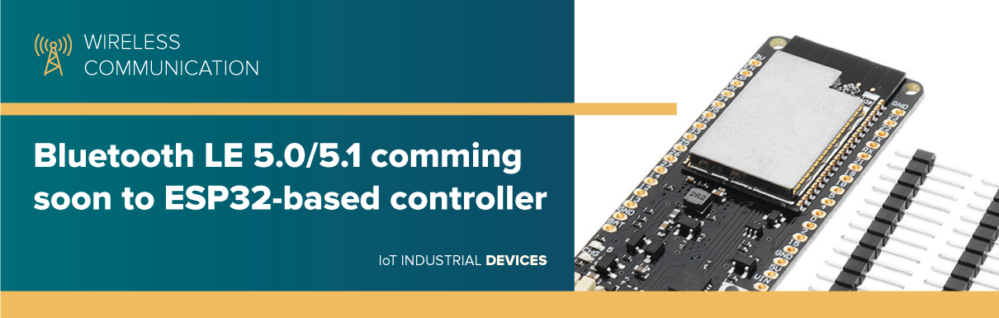
Bluetooth LE 5.0/5.1 comming soon to ESP32-based controller

The Espressif’s flagship ESP32 chip recently passed the SIG Bluetooth LE 5.0 certification. This confirms that the version of the protocol supported by the ESP32 microcontroller has been upgraded from Bluetooth LE 4.2 to Bluetooth LE 5.0, which is more stable and compatible.

The implementation and development of the Bluetooth LE (BLE) application requires not only a system that supports this function, but also an attached Bluetooth LE protocol stack consisting of a driver and a host.

Bluetooth 5.0 update for ESP32

Thanks to Bluetooth LE 5.0 certification, ESP32 SoC not only updates the system as a whole, but also adds new features that improve the latest software after passing more stringent tests than previous certification.

Due to hardware limitations, ESP32 does not support such functions of Bluetooth LE 5.0 as 2M PHY, LE Long Range, and ADV Extensions.

It is also worth mentioning that the combination of Bluetooth and Mesh networking is expected to become a key technology for the Internet of Things. A  Bluetooth® Mesh network enables a „many-to-many” relationship among potentially thousands of wireless devices, where data are transmitted not in a direct radio range but in wide physical areas. Espressif’s contribution in this field is the ESP-BLE-MESH, which got fully certified by Bluetooth SIG in September 2019.
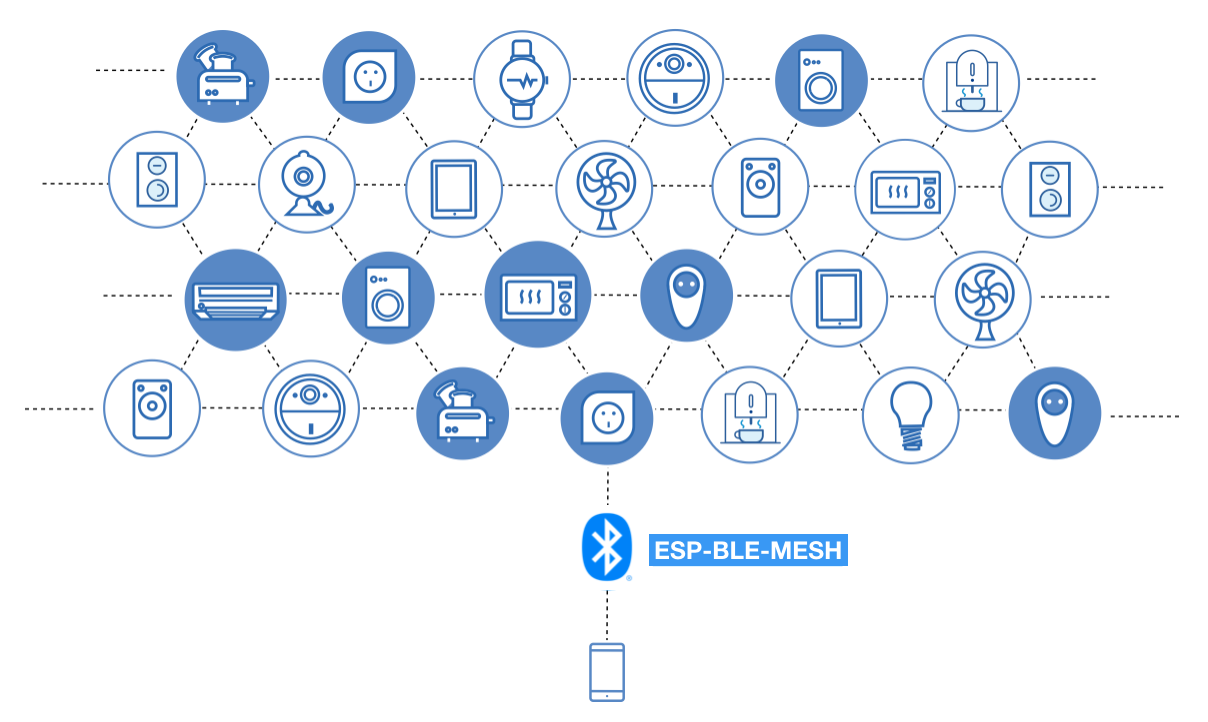
Several Bluetooth-operated products on the market, such as wearable devices, smart speakers, cleaning robots, smart lights/sockets, etc., provide evidence that Bluetooth 5.0 and the Bluetooth Mesh networking technology are mature enough to drive the development of interconnected IoT devices. To this end, Espressif’s chips and ESP-BLE-MESH, in particular, are designed to help customers develop easily secure and cost-effective products for smart homes, smart buildings, healthcare, new automobiles and other smart industries.

Source: https://www.espressif.com/en/news/BLE_5.0_Certification

Industrial use of ESP32-based solutions

One of industrial IoT devices, supporting Espressif’s ESP32 technology is eModGATE from TECHBASE. Economical, ESP32-based solution can serve as an end-point in any installation or works well as a gateway, gathering data from scattered sensor mesh across the installation. For more information check Industrial IoT Shop with all the configuration options for eModGATE.

eModGATE with ESP32
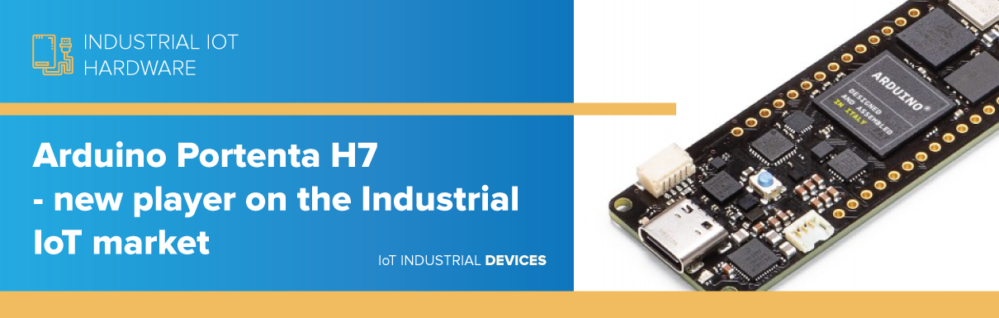
Arduino Portenta H7 - new player on the Industrial IoT market

At the Consumer Electronics Show 2020, Arduino has made a possibly groundbreaking announcement with the Arduino Pro IDE. This could bring the maker scene and classic industrial companies closer together.

Arduino Portenta H7 features

The Portenta H7 is equipped with an STM32H747Xi with a Cortex-M7 and a Cortex-M4. Portenta H7 has 2 megabytes of RAM and a 16 MByte NOR flash. An SD card can be connected via an adapter. The connection to a wireless network is via WiFi 802.11 b/g/n or Bluetooth 5.1. The charging electronics for a 3.7 volt LiPo battery are already integrated.

With the Arduino Portenta H7, the first model of the new Portenta family was announced. This should be tailored specifically to the needs of industrial applications, AI and robotics scenarios.

Arduino Portenta H7
Arduino Portenta H7

The model is equipped with two 80-pin connectors, plus four UART ports. USB Type-C port can output image signals via DisplayPort. The Portenta H7 is also programmable with an interpreter in MicroPython, JavaScript and TensorFlow Light. The single-platinum calculator should be available from February for 90 euros.

Source: https://www.linuxinsider.com/story/86448.html

What the world says about Arduino Portenta?

Fabio Violante, CEO of Arduino, said manufacturers will be able to create modules for robotics, 3D printer and more:

Portenta H7 is directly compatible with other Arduino libraries and offers new features that will benefit hardware manufacturers, such as a DisplayPorl output, much faster ADC multi-channel and high-speed timers.

Arduino Portenta Carrier

Meanwhile, Charlene Marini, vice president of strategy for Arm’s IoT Services Group commented:

SMEs with industrial requirements require simplified development through secure development tools, software and hardware to economically realize their IoT use cases.

ARM Partnership cooperation

ARM works with Arduino to provide secure, easy-to-manage and manageable devices to a wide range of programmers. Two innovations to date show the results of this partnership.

„Mbed OS Portenty is one of the concrete achievements of the partnership,” said Marini. „Another example is the Arduino SIM card, which uses Pelion connection management.”

She said companies have the ability to provide secure Internet of Things on a large scale. This is the foundation of machine learning, automation and the rapid evolution of applications that cross the physical and digital world.

eModGATE with ESP32

Industrial use of Arduino-like solutions

One of industrial IoT devices, supporting Arduino-like technology is eModGATE from TECHBASE. Economical, ESP32-based solution can serve as an end-point in any installation or works well as a gateway, gathering data from scattered sensor mesh across the installation. For more information check Industrial IoT Shop with all the configuration options for eModGATE.

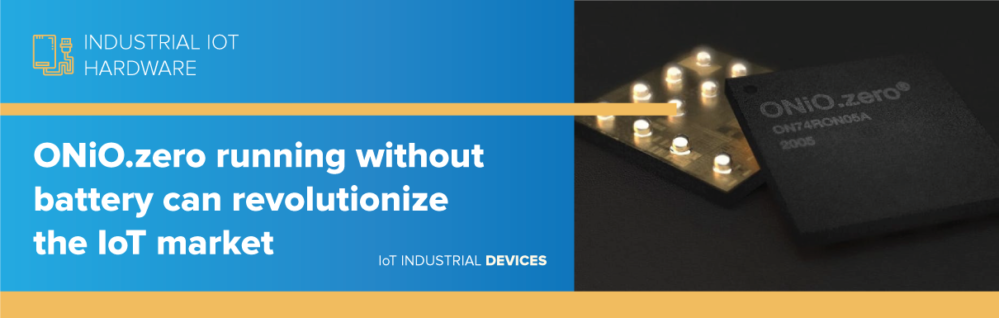
ONiO.zero running without battery can revolutionize the IoT market

ONiO, a Norwegian specialist in the field of the Internet of Things (IoT) for the medical industry, announced ONiO.zero, a RISC-V-based microcontroller with very low power consumption, which can work completely from the energy harvested from the environment. ONiO claims that its design can take energy from the radio spectrum and operate up to 24 MHz.

„ONiO.zero is a wireless MCU with very low power consumption, which uses energy acquisition technology,” wrote the company about its creation. This means that ONiO.zero only works on ambient energy. There are no coin cells, supercaps, lithium and batteries, but still offers a lot of performance.

Battery-based solutions have an unavoidable warning about battery replacement. This leads to increased costs over the entire lifetime. ONiO.zero avoids this problem and reduces operating costs. ONiO.zero is self-powered and supports a wide range of power sources, from multi-frequency RF bands supporting GSM and ISM to optional external sources such as solar, piezoelectric, thermal and voltaic.

Source: https://www.hackster.io/news/onio-zero-offers-up-to-24mhz-of-risc-v-microcontroller-performance-on-nothing-but-harvested-energy-70285321d50d

The microcontroller itself is based on the architecture of the RISC-V instruction set of the open source type (in particular RV32EMC) and operates up to 24 MHz with a supply voltage of 1.8 V. The controller will work if necessary with lower voltages. You can get 6 MHz at 1 V and 1 MHz at 0.8 V, and the system still runs slower, but as fast as 450 mV. Includes 1 KB ROM and 2 KB RAM, as well as 8-32 KB of ultra low power flash memory, capable of 100,000 read and write cycles up to 850 mV.

ONIO.zero running without battery can revolutionize the IoT market

ONiO.zero contains a crystalline Low Energy Bluetooth transmitter (BLE) that can operate at a voltage as low as 850mV, an IEEE 802.15.4 (UWB) broadband transmitter operating in the 3.5-10 GHz band, and optional radio transmitter 433 MHz MICS for the industrial, scientific and medical band (ISM).

ONiO.zero hasn’t been released yet. For more information check the ONiO.zero product page.

Battery-ready IoT devices based on ESP32

Battery / SuperCap power support allows the processes and data to be securely executed, saved or transferred, and the operating system to be safely shutdown or reboot, if the power source has been restored. The power failure alert can also be sent to cloud service, to perform custom task, specified by user or self-learning AI algorithm.

The Moduino device is a comprehensive end-point controller for variety of sensors located throughout any installation. It fully supports temperature and humidity sensors and new ones are currently developed, e.g. accelerometer, gyroscope, magnetometer, etc.

Battery powered Moduino ESP32
Battery powered IoT installation. Source: https://moduino.techbase.eu/

ModuinoModBerry symbiosis allows wide range of wake-up/sleep schedule customization, in order to perform best and save energy accordingly to power supply state. Arduino and MicroPython environments provide libraries to control different scenarios of data and power management.

With built-in algorithms and the possibility to program on your own, the TECHBASE’s sleep/wake addon module can wake the device using schedule/timer. Another option is wake on external trigger, e.g. change of input, etc. All the options for sleep, shutdown and wake can be configured for various scenarios to ensure constant operation of devices, safety of data and continuity of work in case of power failure in any installation.


Arduino ESP32 Serial Port to TCP Converter via WiFi

TECHBASE posted new class, in which you will create serial port to TCP converter using Arduino code running on ESP32 processor. We will use one of device which uses such processor: Moduino X ESP32. For TCP communication WiFi module will be used.

You will need:

  • Moduino X2 (may be also X1) ESP32 device (check this website to find out more)
  • PC with Linux operating system
  • socat application
  • RS-232/RS-485 port in your computer or USB to RS-232/RS-485 converter (for programmming and testing)

Introduction

In example, data sent to serial port (which is used as terminal port in regular Micropython ESP32 device) will be send via WiFi using TCP protocol. It also decodes incomming TCP packets and writes them to serial port. Then virtual serial port can be opened for that TCP packets and perform serial communication. We will use socat application for that.

You can read the complete tutorial at Hackster.io:

SIMCom SIM7000G

TECHBASE’s Industrial IoT devices, ModBerry & Moduino series supports latest SIMCom global-band SIM7000G eMTC & NB-IoT Module. Now the latest SIM7000G as well as 7000E / 7000A versions of modem are available at IIoT-Shop.

SIMCom SIM7000G

Our ModBerry / Moduino devices equipped with latest SIM7000G modem are perfect for industrial automation solutions, e.g. data logging, metering, telemetrics, remote monitoring, security and data management through all Industrial IoT applications.

Supported bandwidths:

    • Global-Band LTE CAT-M1:  B1/B2/B3/B4/B5/B8/B12/B13/B18/B19/B20/B26/B28/B39;
    • Global-Band LTE CAT NB-IoT1:  B1/B2/B3/B5/B8/B12/B13/B17/B18/B19/B20/B26/B28;
    • GPRS/EDGE 850/900/1800/1900Mhz Control Via AT Commands

Supported data transfer:

    • LTE CAT-M1(eMTC) – Uplink up to 375kbps, Downlink up to 300kbps
    • NB-IoT – Uplink up to 66kbps, Downlink up to 34kbps
    • EDGE Class – Uplink up to 236.8Kbps, Downlink up to 236.8Kbps
    • GPRS – Uplink up to 85.6Kbps, Downlink up to 85.6Kbps

You can browse wireless modem category here: https://iiot-shop.com/product-category/modems/

Moduino X3 ESP32

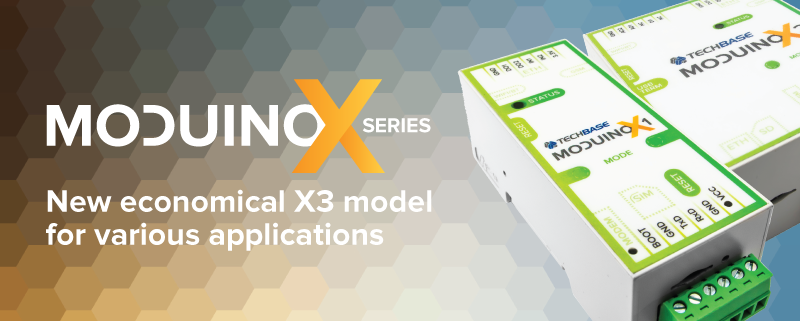
New version of Moduino ESP32, model X3 designed for various economical applications

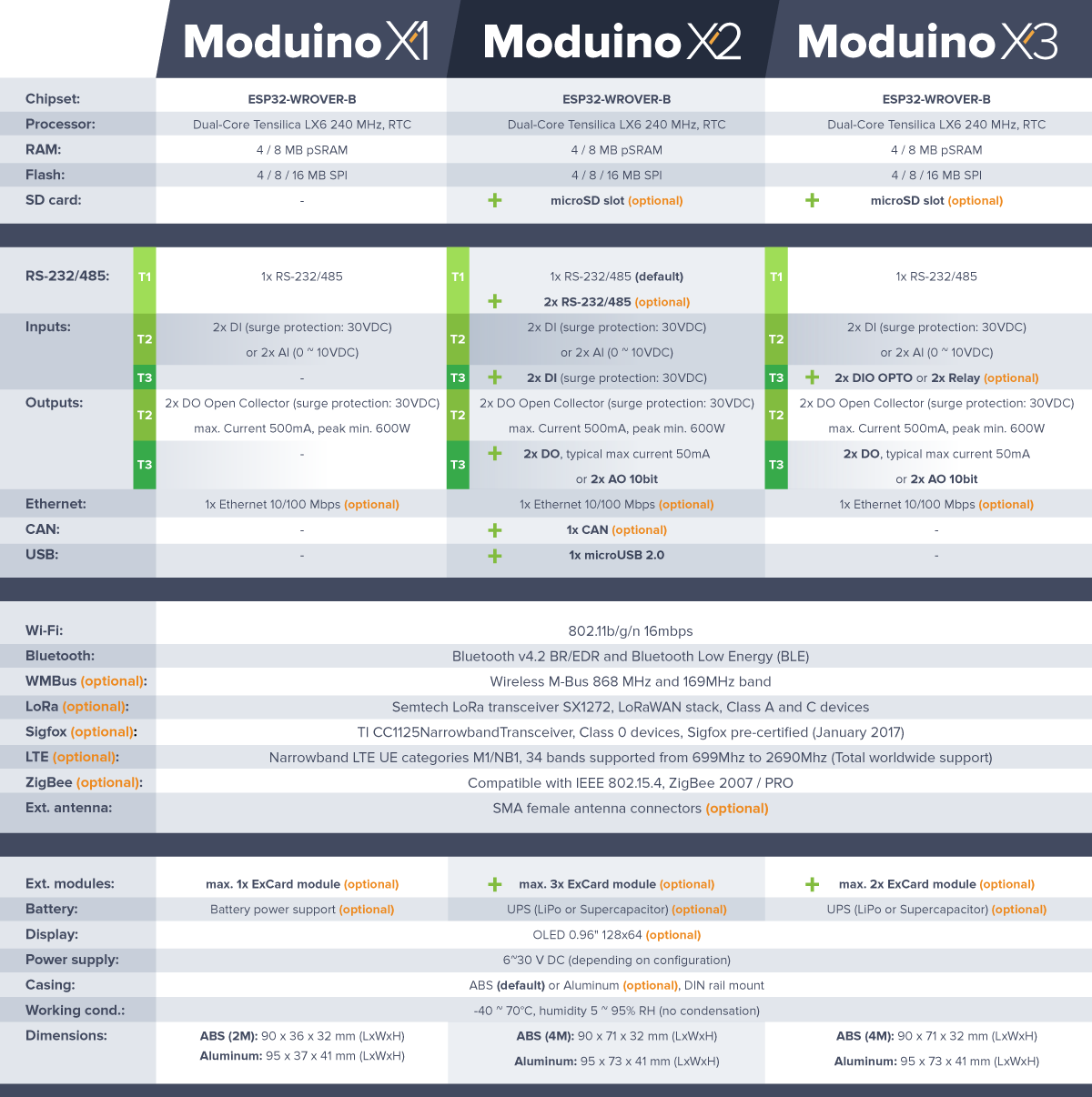
Moduino X3 model offers new approach to Industrial IoT by upgrading mainboard elements to ensure high performance and ultra-low cost of implementation. In comparison with X2 version, new X3 limits additional ExCard expansion modules, drasticly changing the price of the device, but maintaining the 3-terminal I/Os of previous model. An important change is providing opto-isolation for DIO interface (optionally interchangeable with Relay interface for that I/O).

New version of Moduino ESP32, model X3 is designed for various economical applications, such as Industrial IoT installations, data management & remote edge-devices control. Basic configurations of X3 can be purchased for a price even lower than X1/X2 models for development purposes. Please contact our Sales Department (via Chat or e-mail) to get best price for these devices.

To read more about Industrial Moduino X solution, check here: PDF datasheet

Full comparison below:

Moduino ESP32 Comparison

To order configurable devices, choose Moduino X3 option in Moduino X product configurator here:
https://iiot-shop.com/product/moduino/

ESP32-WROVER-B

Upgraded Espressif’s ESP32 module platform for Moduino X

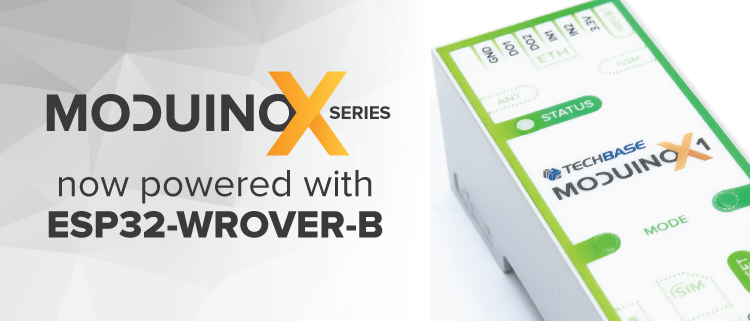
Espressif, a manufacturer of popular ESP32-based IoT solutions, has developed a new version of the ESP32-WROVER module, called ESP32-WROVER-B. Updated module, in addition to the dual-core LX6 microprocessor, has now twice the amount of RAM, compared to previous version of the WROVER module. The ESP32 module can work with Pseudo Static RAM. Up to now, modules with up to 4MB RAM have been the most common. Recently Espressif Systems introduced a new ESP32-WROVER-B module, which is equipped with up to 8MB pSRAM.

ESP32-WROVER-B

The new module is compatible with TECHBASE’s Moduino X series of IIoT devices. The system works with MicoPython, ESP-IDF (freemask based on FreeRTOS with light-weight Internet Protocol), Mongoose OS, Zephyr Project and is Arduino compatible. ESP32-WROVER-B is based on the ESP32-D0WD system with dimensions 5 x 5 mm, which replaced the earlier ESP32-D0WDQ6 (6 x 6 mm). The ESP32-D0WD model has 2 CPU cores that can be controlled independently. The CPU clock frequency can also be configured in the range of 80 to 240 MHz.

Updated Moduino X with ESP32-WROVER-B also comes with variety of Flash Memory available: 4MB and 16MB.

To read more about Industrial Moduino X solution, visit: https://moduino.techbase.eu/

To order sample devices, loor for  ESP32-WROVER-B option in Moduino X product configurator module:

New base platforms for Moduino device

Revised version of TECHBASE’s Moduino edge controller offers now support and compatibility with wide range of Pycom’s compute modules with built-in communication interfaces, e.g. LoRa, Sigfox, NarrowBand-IoT / LTE cat. M1/NB1 and WiFi/BT4.2, similarly to standard Moduino devices, powered by Espressif’s ESP32-WROVER module.

With new Moduino platform you can choose from variety of Pycom modules to power the unit, in order to receive specific wireless features. At the present day Moduino supports these models:

    • WiPy 3.0 with WiFi & Bluetooth 4.2
    • SiPy with WiFi/BT and Sigfox
    • LoPy4 with WiFi/BT and LoRa, Sigfox
    • GPy with WIFi/BT and NarrowBand-IoT / LTE cat.M1/NB1
    • FiPy with WIFi/BT and LoRa, Sigfox, NarrowBand-IoT / LTE cat.M1/NB1

If physical network connection is a must, you can always choose standard Moduino ESP32 with Ethernet expansion module to ensure communication via LAN. Of course the possibility to choose wired-to-wireless communication is also available with the Moduino configurator.

All Pycom-based Moduino solutions are compatible with wide range of interface expansions for standard Moduino ESP32 platform, e.g. RS-232/485, Analog I/Os, Digital I/Os, Relay, CAN and many more, including SuperCap & OLED screen options. You can find the whole list of available expansions here: https://iiot-shop.com/product/moduino/

To read more about Industrial Moduino X solution, visit: https://moduino.techbase.eu/


ESP32-WROVER-B

Upgraded Espressif’s ESP32 module platform for Moduino X

Espressif, a manufacturer of popular ESP32-based IoT solutions, has developed a new version of the ESP32-WROVER module, called ESP32-WROVER-B. Updated module, in addition to the dual-core LX6 microprocessor, has now twice the amount of RAM, compared to previous version of the WROVER module. The ESP32 module can work with Pseudo Static RAM. Up to now, modules with up to 4MB RAM have been the most common. Recently Espressif Systems introduced a new ESP32-WROVER-B module, which is equipped with up to 8MB SPI PSRAM.

ESP32-WROVER-B

The new module is compatible with TECHBASE’s Moduino X series of IIoT devices. The system works with MicoPython, ESP-IDF (freemask based on FreeRTOS with light-weight Internet Protocol), Mongoose OS, Zephyr Project and is Arduino compatible. ESP32-WROVER-B is based on the ESP32-D0WD system with dimensions 5 x 5 mm, which replaced the earlier ESP32-D0WDQ6 (6 x 6 mm). The ESP32-D0WD model has 2 CPU cores that can be controlled independently. The CPU clock frequency can also be configured in the range of 80 to 240 MHz.

Updated Moduino X with ESP32-WROVER-B also comes with variety of Flash Memory available: 4MB, 8MB and 16MB.

To read more about Industrial Moduino X solution, visit: https://moduino.techbase.eu/

To order sample devices, visit our new Industrial IoT Shop and ask our Sales Department via chat about new Moduino X with ESP32-WROVER-B module:

Various data connection protocols & MQTT data management solutions

To take full advantage of the TECHBASE’s Industrial IoT Ecosystem’s capabilities, you can build your own installation, depending on project requirements, choosing from variety of Gateways (Gateway Layer) to control data collected from an array of Moduino edge devices (Sensor Layer). Moduino can be programmed in one of open software platforms, e.g. MicroPython to gather the data and send it, using MQTT standard protocol, further to Gateway and/or cloud service.

Both Moduino ESP32 and Pycom-based Moduino supports open & free libraries, shared by Pycom, tested and approved by constantly growing ESP32/Arduino community. TECHBASE company has plans to provide an open-source platform for managing services & remote configuration and control of endpoint Moduino devices using MicroPython.

MQTT Data Management

Wide range of protocol support

All TECHBASE’s solution can be empowered with iMod software incl. protocol support for industrial interfaces, e.g. M-Bus, Modbus, SNMP, MQTT. iMod software works seamlessly with Node-RED using MQTT protocol, allowing use of bacnet and direct control over devices I/Os with Google’s platform-neutral protobuf – extensible mechanism for serializing structured data and zeroMQ controls to connect the code in any modern language, on any platform. The protocol drivers library can be expanded with CODESYS development system to support PROFIBUS, CANopen, EtherCAT, PROFINET and EtherNet/IP.