New industrial board from NVIDIA

NVIDIA has released Jetson AGX Xavier Industrial Module, that adds two Cortex-R5 functional safety cores (FuSa), with 32GB ECC RAM, 64GB eMMC, and shock and vibration resistance to the original design.

Robotics and automation are increasingly used in manufacturing, agriculture, construction, energy, government, and other industries, but many companies struggle to incorporate the benefits of AI and deep learning into their most demanding applications. doing.

Jetson AGX Xavier

With the new NVIDIA Jetson AGX Xavier Industrial module, NVIDIA can deploy AI to edge devices in harsh environments where security and reliability are important priorities.

AI performance is listed at 30 TOPS. The original AGX Xavier was announced with the same rating but is now listed at 32 TOPS. The module supports the same CUDA-X accelerated computing stack, JetPack SDK, and Ubuntu-based BSP as the other Jetson modules.

Source: http://linuxgizmos.com/jetson-agx-xavier-industrial-adds-ruggedization-and-fusa-cores/

New features of AI brought to ModBerry series

In October 2020, with the release of the latest Compute Module 4 from Rasbperry Pi Foundation, TECHBASE announced an upgraded device from ModBerry 500 series, called ModBerry 500 CM4. Thanks to the high-performance PCI-Express bus introduced in Compute Module 4 and Raspberry Pi community, the device itself presents support for a wide range of new applications, such as use of Google’s Artificial Intelligence modules at ease.

Therefore, TECHBASE designed a new device, called ModBerry AI GATEWAY 9500-CM4, utilizing the vertical format of ModBerry 9500, latest Compute Module 4 and Google’s Coral TPU. Installation-ready AI GATEWAY allows direct application in industrial fields.

TECHBASE’s AI GATEWAY series, world-first industrial gateway utilizing Raspberry Pi Compute Module 4 and Google Coral TPU

AI GATEWAY with Coral TPU enhancement 

Neuron network capabilities enhance CM4-based devices, not only collecting and sending data, but also allows local data change predictions and allows direct management on-site. This feature gives the possibility for various applications, such as data analysing and establishing trends predictions, smart alarms and smart monitoring, local notification control, etc.

Used Edge TPU coprocessor via PCI-Express bus is capable of performing 4 trillion operations per second (TOPS), using 0.5 watts for each TOPS (2 TOPS per watt). Google Coral easily integrates with Raspberry Pi Compute Module in Linux and optionally in Windows with full support of TensorFlow Lite framework and AutoML Vision Edge solution.

TECHBASE’s AI GATEWAY series, world-first industrial gateway utilizing Raspberry Pi Compute Module 4 and Google Coral TPU

AI GATEWAY with available expansion cards 

ModBerry AI GATEWAY 9500-CM4 can be equipped with serial RS-232/485 ports, range of digital and analog I/Os, USB, HDMI and Ethernet. Interfaces can be expanded with additional I/Os and opto-isolation, relays, Ethernet, 1-Wire, CAN, M-Bus Master and Slave, accelerometer, OLED screen and many more features like TPM Security Chip, eSIM and SuperCap backup power support. 

ModBerry AI GATEWAY 9500-CM4 series also offers a standard PCI module support for various wireless communication protocols, such as:

  • GSM modem (4G/LTE and fast 5G modem, interchangeable with Coral TPU)
  • economic NarrowBand-IoT technology
  • LoRa, ZigBee, Sigfox, Wireless M-Bus
  • secondary Wi-Fi/Bluetooth interface or Wi-Fi Hi-Power
  • custom wireless interfaces

ModBerry AI GATEWAY 9500-CM4 availabilityFirst prototypes are being developed, since Compute Module 4 is already available for the purchase. Delivery time for various configurations of AI GATEWAY will be approximately 2 months, depending on the CM4 supply on the market and chosen expansion cards. For more information contact TECHBASE’s Sales Department via email or Live Chat here.

Raspberry Pi 4 is well known for its size and value, but will soon start to be seen for it’s significant performance. A few months ago, the Raspberry Pi Foundation announced the development of Vulkan support on Raspberry Pi 4. Today, the team published demonstration photos showing updates and progress in the current state of the project.

When we announced the effort back in January we were at the point of rendering a coloured triangle, which required only minimal coverage of the Vulkan 1.0 API in the driver. Today, we are passing over 70,000 tests from the Khronos Conformance Test Suite for Vulkan 1.0 and we have an implementation for a significant subset of the Vulkan 1.0 API.

Source: https://www.raspberrypi.org/blog/vulkan-update-now-with-added-source-code/

Rasbperry Pi 4 upgrade of ModBerry M500

In 2019, with the premiere of Raspberry Pi 4, TECHBASE upgraded their ModBerry M500 device with the latest revision of this popular SBC, further enhancing the performance of their device. New 1.5GHz quad-core 64-bit ARM Cortex-A72 processor (approximately 3 times better performance than previous Cortex-A53 powering Raspberry Pi 3+ Model B and Compute Module 3 and 3+). ModBerry M500 can now be configured from 2GB / 4GB LPDDR4 SDRAM options.

Revised ModBerry M500 features Gigabit Ethernet, USB3.0, two microHDMI ports supporting OpenGL ES 3.x and 4Kp60 hardware decode of HEVC video. The device is fully compatible with previous versions of Rasbperry Pi based Industrial IoT devices and accessories from TECHBASE.

Raspberry Pi & ESP32 use-hack of OpenMQTTGateway

Many developement boards can be used in home and industrial applications to control and manage data. Check out latest video from open-tech infuencer, Andreas Spiess, in which he uses Raspberry Pi and ESP32 boards to build and visualize weight loss system using Xiaomi scale and Node-RED, influxDB and Grafana. Open MQTT Gateway might come in handy too.

Industrial use of Raspberry Pi & ESP32-based solutions

One of industrial IoT devices, supporting Espressif’s ESP32 technology is eModGATE from TECHBASE. Economical, ESP32-based solution can serve as an end-point in any installation or works well as a gateway, gathering data from scattered sensor mesh across the installation. For more information and also Raspberry Pi based solutions check Industrial IoT Shop with all the configuration options for eModGATE.

eModGATE with ESP32

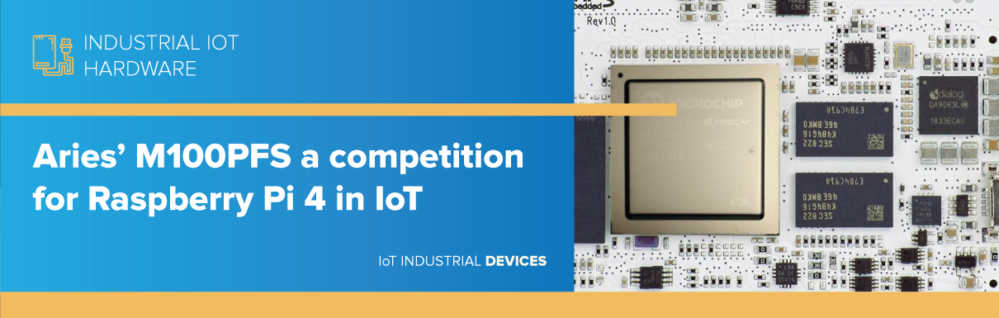
Aries Embedded announced one of the first computing modules with the SoF PolarFire function. It is equipped with a Linux RISC-V SoC chip with a Microchip Microsemi FPGA processor. The M100PFS has the same dimensions of 74 x 42 mm as the similar M100PF module from Aries and is equipped with PolarFire FPGAs without RISC-V core for Linux.

The two major M100PFS SKUs are:

  • M100PFS-025ADA0 — MPFS025T FPGA with 23K LE, 68 math blocks, 4x SERDES; 1GB LPDDR4 RAM for HMS (RISC-V/Linux); 4GB eMMC
  • M100PFS-250AECC — MPFS250T FPGA with 254K LE, 784 blocks, 16x SERDES; 4GB LPDDR4 each for HMS and FPGA; 8GB eMMC

Source: http://linuxgizmos.com/linux-powered-module-charges-up-the-risc-v-polarfire-soc/

Aries’ M100PFS a competition for Raspberry Pi 4 in IoT
M100PFS

PolarFire SoC from Microchip combines the previously introduced PolarFire FPGA card with 4x RISC-V U54-MC SiFive core. Microchip claims that PolarFire SoCs are superior to hybrid SoCs with an arm / FPGA, such as Xilinx Zynq, with more configurable and open RISC-V designs, lower power consumption and much better real-time deterministic functions. I am In December, the company called it „the first FPGA SoC chip with deterministic and consistent RISC-V processor clusters and the deterministic L2 memory subsystem enabling the use of Linux and real-time applications.”

Industrial use of market Raspberry Pi 4 SBCs

A year ago, TECHBASE released an updated version of the ModBerry M500 industrial IoT computer, replacing the aging Raspberry Pi 3 with a 3B+, giving it better performance. With the recent launch of the Raspberry Pi 4, TECHBASE has yet again, announced another upgrade to the M500, which now packs the latest single-board computer.

ModBerry M500 with Raspberry Pi’s 4

ModBerry M500 also utilizes many more SBC platforms, such as Orange Pi, NanoPi and Intel-based UpBoard. Find more information here: https://iiot-shop.com/product/modberry-m-series/

Raspberry Pi based controller with Modbus, M-Bus & MQTT support

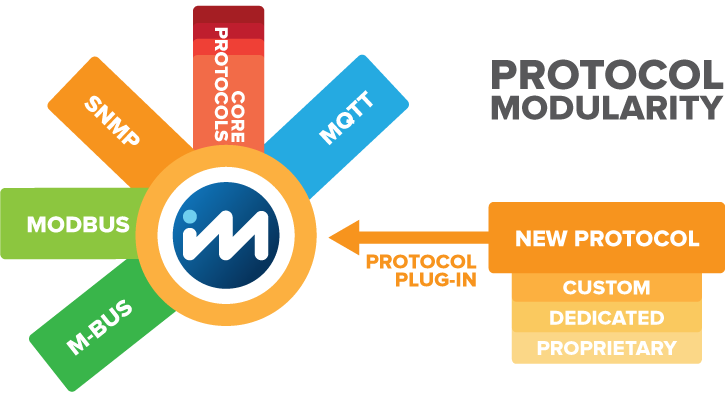
Raspberry Pi Compute Module 3+ based ModBerry industrial computer series use latest Compute Module 3+, powered by Quad-core Cortex-A53 1.2GHz processor, 1024MB LPDDR2 RAM and up to 32GB Flash eMMC. The module increase the device’s performance up to ten times, maintaining low power consumption and optimal price of the solution. Raspberry Pi based ModBerry features industrial protocol support, e.g. Modbus, M-Bus, SNMP, MQTT and the possibility to add new protocols with ease.

ModBerry protocol modularity

ModBerry remote management

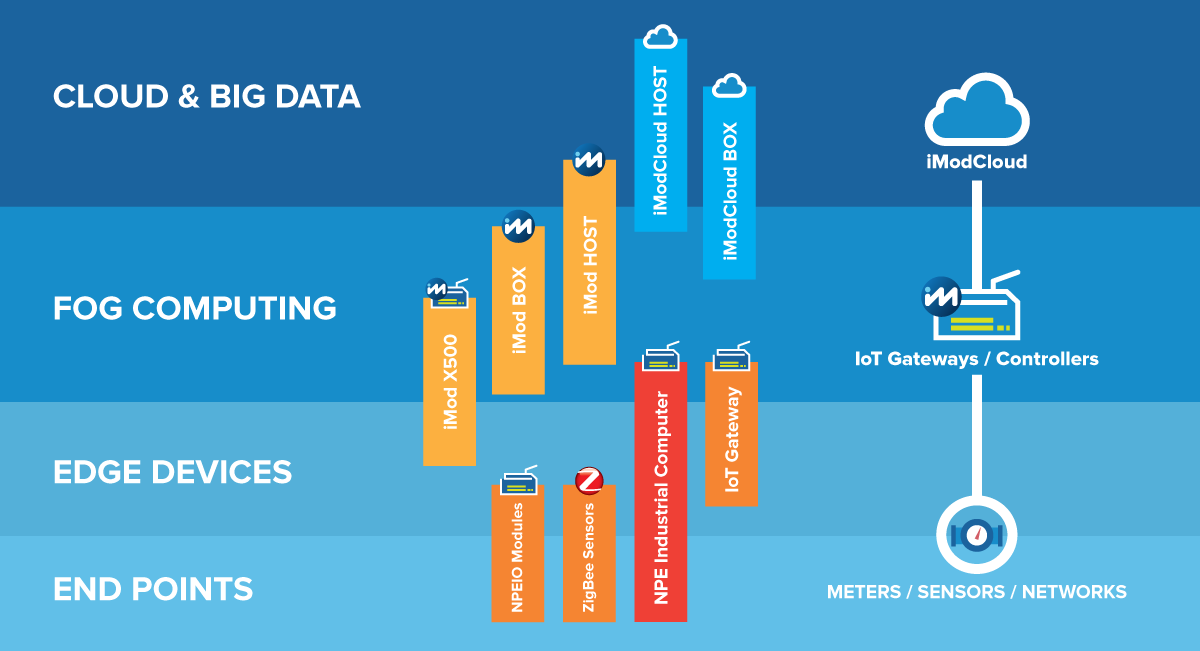
The iMod platform guarantees a quick start and full use of the ModBerry computer, without the need to write complicated software. One of the main advantages of the iMod platform is its ease of use and variety of available functionalities. Due to the available SDK, the platform can be extended with new, dedicated functionalities.

iMod can be installed directly onto ModBerry device or using external PC outside the installation (iModBOX). The third option is using dedicated hosting server to host the iMod software (iModHOST).

iModCloud Ecosystem

Another product is iModCloud software-service, which enables full control of ModBerry/iMod devices. Together they form a stand-alone solution – iModCloud Ecosystem, a combination of cloud services with web-based user interface and industrial devices, fully manageable remotely.

iModCloud can be hosted externally, using stable DELL servers to host the cloud service.(iModCloudHOST). For higher data security or depending on project features, iModCloud can be hosted internally, inside the installation (iModCloudBOX) hosted by the dedicated Mini-PC or from portable memory stick (iModCloudSTARTER).

More information Raspberry Pi based industrial device

TECHBASE provides solutions for industrial automation, telemetry, remote access and integration with IT systems. Since 2012 the company has been actively developing its competences in the market. Due to an innovative approach – based on the use of cutting-edge technologies, open standards and easy to maintain products – the company has earned the trust of Customers all over the world.

TECHBASE’s mission is to provide our Customers with tools, which will shorten and simplify the process of system implementation. With open architecture and high level of configurability, maintenance of a system is not expensive anymore.

To read more about ModBerry 500 M3 solution, download PDF datasheet: http://a2s.pl/products/ModBerry/ModBerry_500M3_EN.pdf
Read more about all ModBerry Industrial Solutions at: https://modberry.techbase.eu/

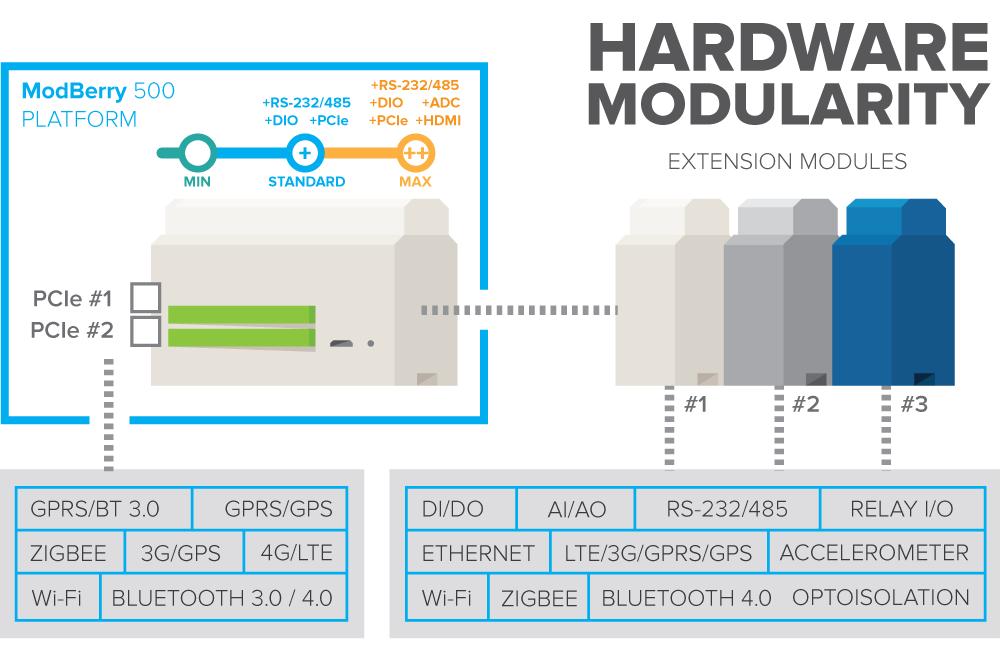
ModBerry hardware modularity

ModBerry 500 hardware modularity

The main features of ModBerry Industrial Computers series are the extension capabilities to increase input/output number, add up to 4 internal wireless communication modems and modules, support additional features such as accelerometer or opto-isolation options.

ModBerry 500 series offers wide range of industrial interfaces e.g.: digital inputs/outputs, analog inputs/outputs, relay outputs, serial RS-232/485 ports, Ethernet, 1-Wire, CAN, USB 2.0, HDMI, LTE/3G/GPRS, NarrowBand IoT/LTE, GPS, ZigBee, WiFi, Bluetooth, LoRa and many more via extension modules.

Node-RED and Raspberry Pi

Node-RED is an interesting environment for modeling processes, by visually defining information flows. It is a module working in the node.js environment. It is a flow-based programming tool, originally developed by the IBM Emerging Technology Services team and now part of the JS Foundation.

History of Node-RED environment

Node-RED provides users with a ready-made set of easy-to-connect nodes and supports code creation by configuring data transmission and sensor communication to their applications. It is up to you whether you create a new flow of equipment to increase and control the economics of the IoT system. Hardware platform for this system can easily be Raspberry Pi based industrial device, like ModBerry computer.

Node-RED started life in early 2013 as a side-project by Nick O’Leary and Dave Conway-Jones of IBM’s Emerging Technology Services group. What began as a proof-of-concept for visualising and manipulating mappings between MQTT topics, quickly became a much more general tool that could be easily extended in any direction.

It was open-sourced in September 2013 and has been developed in the open ever since, culminating in it being one of the founding projects of the JS Foundation in October 2016.

Source: https://nodered.org/about/

Who can benefit from Node-RED?

Flow-based programming is ideal for the creators of IoT solutions for visualizing and controlling data flow, maintaining and managing a series of cause-related events. Apart from the fact that Node-RED can be run basically anywhere you can install NodeJS, this program is a card for IoT solution developers for mapping and maintaining solutions.

With the development and implementation of Internet of Things solutions around the world, Node-RED has become an invaluable tool for solution architects and programmers, due to its ease of use in flow programming and solution mapping. IoT solutions, also known as applications, are the convergence of the physical world with the digital world to extract valuable data for insight that increases process or system performance. This convergence results in countless triggers and events that must be performed to control systems or notify those responsible when the system is above its expectations.

How does Node-RED work?

Node.js is a runtime environment for programs written in JavaScript, currently based on the Chrome V8 engine. While I used to associate JavaScript only with scripts for animated galleries on websites, after a really short period of learning I notice the great advantages of using JS as a language for creating programs launched outside of the browser. Programs run in node.js work in the background, in the console, or even have their own UI with normal windows in Windows, macOS or Linux.

Node-RED example
Node-RED example

The principle of operation is relatively simple. Visually, we combine different blocks that perform specific functions. Through connections, Node-RED sends messages, which are basically a JavaScript object, consisting of various data.

Node-RED consists of a Node.js based runtime that you point a web browser at to access the flow editor. Within the browser you create your application by dragging nodes from your palette into a workspace and start to wire them together. With a single click, the application is deployed back to the runtime where it is run. The palette of nodes can be easily extended by installing new nodes created by the community and the flows you create can be easily shared as JSON files.

Source: https://nodered.org/about/

Sleep functionality for ModBerry 500 CM4 devices

TECHBASE company designed an extended version of Raspberry Pi Compute Module 4 based devices, ModBerry 500-CM4-PM series for better power management in changing conditions of industrial applications. With the use of GPIO the module can manage boot, sleep mode or safe shutdown of the device in terms of unexpected drop in the power network with help of built-in ESP32 module and Arduino environment.

In the last few years developers marketed a wide range of ARM-based development boards, lacking in enhanced power management, especially sleep and wake up modes, commonly used in PC-grade computing. These boards are not adjusted for battery power supply, so it’s natural that sleep/wake functions should be implemented. In connection with the development of solutions based on Linux-SBC, key factor is adding sleep modes to any remote installation

ESP32 based addon module for Raspberry Pi

With built-in algorithms and the possibility to program on your own, the TECHBASE’s sleep/wake addon module can wake the device using a scheduler/timer. The module itself is based on ESP32-WROVER, used in the Moduino X series. ESP32 as a lightweight and low-powered solution is a perfect aid system for Raspberry Pi. Another option is wake on external triggers, e.g. change of input state, etc. All the options for sleep, shutdown and wake can be configured for various scenarios to ensure constant operation of devices, safety of data and continuity of work in case of power failure in any installation.

Sleep mode with additional power backup

Additional power management option for ModBerry devices is sleep functionality enhanced with SuperCap UPS energy backup device. This solution allows programming scenarios including the execution of chosen actions, in order to save data, send a notification and restart/shutdown the controller after completion.

Advanced power management solution

Most advanced configuration includes use of ESP32 module, known from the successful, lightweight Moduino X series, for extra logic for wake up / sleep scripts. This addon will allow the RaspberryPi-based ModBerry device to be woken up by the internal ESP32 controller

Moduino-ModBerry symbiosis allows a wide range of wake-up/sleep schedule customization, in order to perform best and save energy according to power supply state. Arduino and MicroPython environments provide libraries to control different scenarios of data and power management.

ModBerry 500-CM4-PM availability

The preliminary ModBerry 500-CM4-PM devices are available on request and delivery time will be specified by the Sales Dept. depending on the size of the project. Contact via email or Live Chat here: https://iiot-shop.com/product/modberry-500-cm4-pm/

Updated ClusBerry device for IoT prototyping

Recently TECHBASE introduced ClusBerry, an industrial Raspberry Pi based cluster device, utilizing up to 8x Raspberry Pi Compute Module 4 and custom cluster board with a wide range of configuration possibilities.

For smaller projects and IoT prototyping, the company designed a smaller and ready-to-deploy cluster device including two independent ModBerry I/O mainboards and two Compute Module 4’s. The ClusBerry-2M offers similar resources as double ModBerry 500-CM4 with software cluster management tools – Docker and K3s Lightweight Kubernetes solutions.

New features of multiple Compute Modules 4 brought to new ClusBerry series

Fully configurable devices are something desirable in the IoT market, where high performance and low cost is a key factor to success of implementation. TECHBASE’s Industrial IoT Ecosystem gives the opportunity to adjust ordered devices with certain resources and cut unnecessary I/Os, lowering the total cost of the device. 

Various implementations must have guaranteed high hardware performance to react fast enough in real time. For this purpose, the arrays of processor blocks are constructed to be assigned to individual tasks. For several years now, attempts have been made to use various types of SBC for this purpose, including, of course, Raspberry Pi

Each module can perform various tasks, from standard I/O gateway, wireless modem, Gigabit LAN router to NAS file server and AI Gateway with Google Coral Edge TPU modules. You can manage your cluster modules at ease, boot modules from one to another, upgrade firmware crosswise and provide safe operation of each module. The modules are connected to each other to provide such features and allow quick healing of the dual cluster.

Reason for use of CM4 cluster in ClusBerry-2M

The introduction of new Compute Module 4 has opened the possibility to construct and maintain effective hardware matrix solutions with the use of both PCI-Express buses and 1GBps Ethernet. Therefore, the ClusBerry-2M opens up completely new capabilities of utilizing cluster solutions for Industrial Automation and server applications.

ClusBerry-2M can be equipped with multiple expansion cards, e.g. serial RS-232/485 ports, range of digital and analog I/Os, USB, HDMI and Ethernet. Interfaces can be expanded with additional I/Os and opto-isolation, relays, Ethernet, 1-Wire, CAN, M-Bus Master and Slave, accelerometer and many more features like TPM Security Chip & eSIM. The device can also be equipped with additional SuperCap backup power source for continuous work and safe boot/shutdown in case of emergency.

ClusBerry-2M series also offers two M.2 NVMe SSD slots and up to four standard miniPCIe module support for various wireless communication protocols, such as:

  • GSM modem (4G/LTE and fast 5G modem)
  • economic NarrowBand-IoT technology
  • LoRa, ZigBee, Z-Wave, Sigfox, Wireless M-Bus
  • secondary Wi-Fi/Bluetooth interface or Wi-Fi Hi-Power
  • custom wireless interfaces

ClusBerry-2M availability

Basic version of ClusBerry-2M is available in 2-4 weeks. Delivery time for various configurations of ClusBerry-2M including ExCard modules and modems can be approximately 2 months, depending on the CM4 supply on the market and chosen expansion cards. For more information please contact via our website and sign the offer here: https://clusberry.techbase.eu/

New features of Edge TPU brought to ModBerry series

In October 2020, with the release of the latest Compute Module 4 from Rasbperry Pi Foundation, TECHBASE announced an upgraded device from ModBerry 500 series, called ModBerry 500 CM4. Thanks to the high-performance PCI-Express bus introduced in Compute Module 4 and Raspberry Pi community, the device itself presents support for a wide range of new applications, such as use of Google’s Artificial Intelligence modules at ease.

Therefore, TECHBASE designed a new device, called ModBerry AI GATEWAY 9500-CM4, utilizing the vertical format of ModBerry 9500, latest Compute Module 4 and Google’s Coral TPU. Installation-ready AI GATEWAY allows direct application in industrial fields.

TECHBASE’s AI GATEWAY series, world-first industrial gateway utilizing Raspberry Pi Compute Module 4 and Google Coral TPU

AI GATEWAY with Coral TPU enhancement 

Neuron network capabilities enhance CM4-based devices, not only collecting and sending data, but also allows local data change predictions and allows direct management on-site. This feature gives the possibility for various applications, such as data analysing and establishing trends predictions, smart alarms and smart monitoring, local notification control, etc.

Used Edge TPU coprocessor via PCI-Express bus is capable of performing 4 trillion operations per second (TOPS), using 0.5 watts for each TOPS (2 TOPS per watt). Google Coral easily integrates with Raspberry Pi Compute Module in Linux and optionally in Windows with full support of TensorFlow Lite framework and AutoML Vision Edge solution.

TECHBASE’s AI GATEWAY series, world-first industrial gateway utilizing Raspberry Pi Compute Module 4 and Google Coral TPU

AI GATEWAY with available expansion cards 

ModBerry AI GATEWAY 9500-CM4 can be equipped with serial RS-232/485 ports, range of digital and analog I/Os, USB, HDMI and Ethernet. Interfaces can be expanded with additional I/Os and opto-isolation, relays, Ethernet, 1-Wire, CAN, M-Bus Master and Slave, accelerometer, OLED screen and many more features like TPM Security Chip, eSIM and SuperCap backup power support. 

ModBerry AI GATEWAY 9500-CM4 series also offers a standard PCI module support for various wireless communication protocols, such as:

  • GSM modem (4G/LTE and fast 5G modem, interchangeable with Coral TPU)
  • economic NarrowBand-IoT technology
  • LoRa, ZigBee, Sigfox, Wireless M-Bus
  • secondary Wi-Fi/Bluetooth interface or Wi-Fi Hi-Power
  • custom wireless interfaces

ModBerry AI GATEWAY 9500-CM4 availabilityFirst prototypes are being developed, since Compute Module 4 is already available for the purchase. Delivery time for various configurations of AI GATEWAY will be approximately 2 months, depending on the CM4 supply on the market and chosen expansion cards. For more information contact TECHBASE’s Sales Department via email or Live Chat here.
Docker VPN-based Raspberry Pi Server tutorial

Many developement boards can be used in home and industrial applications to control and manage data. Get secure remote access from anywhere via your own VPN based on Docker containers. Check out latest video from open-tech infuencer, Andreas Spiess, in which he uses Raspberry Pi and Docker, Node-RED, influxDB and Grafana to build custom Raspberry Pi data server.

Docker implementation in CM4 cluster – ClusBerry-2M

The introduction of new Compute Module 4 has opened the possibility to construct and maintain effective hardware matrix solutions with the use of both PCI-Express buses and 1GBps Ethernet. Therefore, the ClusBerry-2M opens up completely new capabilities of utilizing cluster solutions for Industrial Automation and server applications.

ClusBerry-2M can be equipped with multiple expansion cards, e.g. serial RS-232/485 ports, range of digital and analog I/Os, USB, HDMI and Ethernet. Interfaces can be expanded with additional I/Os and opto-isolation, relays, Ethernet, 1-Wire, CAN, M-Bus Master and Slave, accelerometer and many more features like TPM Security Chip & eSIM. The device can also be equipped with additional SuperCap backup power source for continuous work and safe boot/shutdown in case of emergency.

ClusBerry-2M series also offers two M.2 NVMe SSD slots and up to four standard miniPCIe module support for various wireless communication protocols, such as:

  • GSM modem (4G/LTE and fast 5G modem)
  • economic NarrowBand-IoT technology
  • LoRa, ZigBee, Z-Wave, Sigfox, Wireless M-Bus
  • secondary Wi-Fi/Bluetooth interface or Wi-Fi Hi-Power
  • custom wireless interfaces

Software cluster management with Docker and K3s Lightweight Kubernetes

With use of Docker-based and Kubernetes solutions, installation and management of ClusBerry-2M is easy and backed with a large community for further support and development. Kubernetes is a portable, extensible open-source software platform for managing containerized tasks and sites that enables declarative configuration and automation. The Kubernetes ecosystem is large and dynamically developing. Kubernetes services, support and tools are widely available.

Kubernetes provides:

  • Detection of new services and traffic. Kubernetes can balance the load and redirect the network traffic to ensure the stability of the entire installation.
  • Kubernetes data storage management enables you to automatically mount any type of storage system – on-premises, from cloud providers and others.
  • Automatic deployment and rollback. You can describe the expected state of your installation with Kubernetes, which will take care of bringing the actual state to the expected state in a controlled manner. For example, with Kubernetes, you can manage your cluster modules at ease, boot modules from one to another, upgrade firmware crosswise and provide safe operation of each module.
  • Automatic management of available resources. ClusBerry-2M provides a cluster of modules that Kubernetes can use to run tasks in containers. You determine the CPU power and RAM requirements for each container. Kubernetes arranges containers on machines in such a way as to make the best use of provided resources.
  • Self-healing Kubernetes reboots containers that have stopped working, replaces them with new ones, forces disabling containers that are not responding to certain status queries, and does not announce their availability until they are ready to run.
  • Managing confidential information and Kubernetes configuration with TPM Security Chip allows you to store and manage confidential information such as passwords, OAuth tokens and SSH keys. Secured data and configuration information can be provided and changed without having to rebuild the container image and without exposing sensitive data in the overall software configuration.