Wpisy

On March 21, Taiwan’s Central Command Trend Center updated travel restrictions. This has significantly reduced movement, especially between visitors and non-residents within the country. Many countries around the world continue to struggle to stop the COVID-19 pandemic, but many economic activities, including business trips, were forced to stop.

To stay in business without the possibility of personal meetings, many companies rely on remote business solutions to communicate quickly and efficiently. One such solution is a telepresence robot that allows remote employees to physically exist outside of a regular video conference. OhmniLabs specializes in robotics and telepresence technologies, using UpBoard arrays for their devices.

Source: https://up-board.org/up/specifications/

Telepresence Robots use in coronavirus age

Ohmni Telepresence Robots are also ideal for telemedicine and home care, especially when dealing with patients who may have been exposed to an infectious disease. Healthcare professionals can easily operate their telepresence robots using mobile phones, make regular observations, make initial inquiries and share medical records in real time with relevant staff. Telepresence robots allow medical staff to do their jobs without touching the patient and can be easily cleaned and disinfected later.

The AAEON UP IoT Development Board, with thousands of units sold, is one of the most popular boards used by professional manufacturers. UP boards are implemented in many applications such as robots, drones, machine vision, intelligent home, education, transportation and IoT. OhmniLabs chose UP boards for performance, flexibility, and competitive price. The UP board has Intel Atom x5-Z8350 processor and I / O features such as Gigabit Ethernet port, 4 USB 2.0 ports, 1 USB 3.0 port, HDMI, DSI / eDP. UP boards are popular in the embedded market due to their expandability and small size.

Intel-based industrial computer

The first unit that entered the ModBerry series is a device called ModBerry M1000, utilizing the capabilities of UpBoard platform. New solution uses Quad-core Intel Atom x5-Z8350 processor with 4x 1.44GHz frequency (boost up to 4x 1.92GHz), up to 4GB RAM and 64GB eMMC on board. The new platform also features USB 3.0 and Gigabit Ethernet 10/100/1000Mbps for faster communication and supports new operating systems, e.g.: Windows 10, Yocto, Ubuntu, Ubilinux, Android 6.0.

To read more about ModBerry M1000 solution, download PDF datasheet: https://iiot-shop.com/product/modberry-m-series/


ModBerry M1000

Raspberry Pi in the service of COVID-19 monitoring

Raspberry Pi devices are often used by scientists, especially for capturing and analyzing biological data. A particularly noteworthy sober project has published news this week.

According to the researchers at UMass Amherst, FluSense is about the size of a dictionary. Includes an inexpensive microphone set, heat sensor, Raspberry Pi and Intel Movidius 2 neural engine. The idea is to use AI on the edge to classify audio samples and determine the number of people in a room at any given time.

Image courtesy of the University of Massachusetts Amherst

We believe that FluSense has the potential to expand the arsenal of health surveillance tools used to forecast seasonal flu and other viral respiratory outbreaks, such as the COVID-19 pandemic or SARS,” Rahman told TechCrunch. “By understanding the ebb and flow of the symptoms dynamics across different locations, we can have a better understanding of the severity of a novel infectious disease and that way we can enforce targeted public health intervention such as social distancing or vaccination.

Source: https://www.networkworld.com/article/3534101/covid-19-vs-raspberry-pi-researchers-bring-iot-technology-to-disease-detection.html

Crowd monitoring with Raspberry Pi

The device distinguishes cough from other sounds. By combining cough data with information about the size of the crowd at your location, you can get an index that predicts the number of people who may be experiencing flu symptoms.

Currently we are planning to deploy the FluSense system in several large public spaces (e.g., large cafeteria, classroom, dormitories, gymnasium, auditorium) to capture syndromic signals from a broad range of people who live in a certain town or city,” they said. “We are also looking for funding to run a large-scale multi-city trial. In the meantime, we are also diversifying our sensing capability by extending FluSense’s capability to capture more syndromic signals (e.g., recently we added sneeze sensing capability to FluSense). We definitely see a significant level of commercialization potential in this line of research.

https://www.raspberrypi.org/blog/flusense-takes-on-covid-19-with-raspberry-pi/
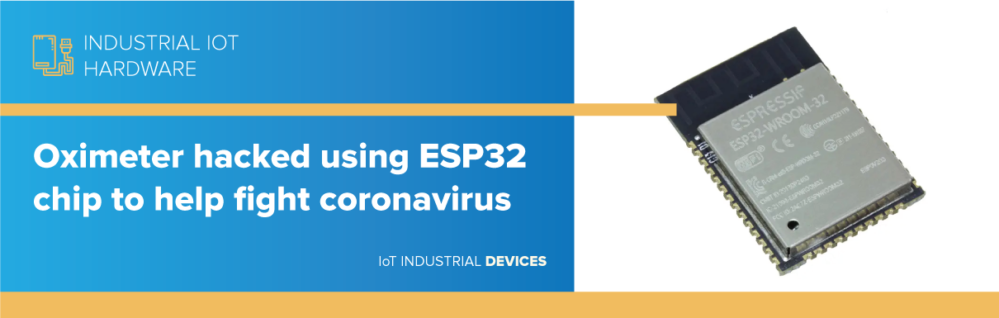
Oximeter hacked using ESP32 chip to help fight coronavirus

Many developement boards can be used in home and industrial applications to control and manage data. A small ESP32 chip was used to hack customer oximeter – a useful tip to help in current COVID-19 related treatments.

Industrial use of ESP32-based solutions

One of industrial IoT devices, supporting Espressif’s ESP32 technology is eModGATE from TECHBASE. Economical, ESP32-based solution can serve as an end-point in any installation or works well as a gateway, gathering data from scattered sensor mesh across the installation. For more information and also Raspberry Pi based solutions check Industrial IoT Shop with all the configuration options for eModGATE.

Obrazek posiada pusty atrybut alt; plik o nazwie emod1.png
eModGATE with ESP32