Wpisy

UPDATE 22.10.20: ModBerry 500 with Compute Module 4 available for pre-order

TECHBASE’s ModBerry industrial computer series has received an update to Compute Module 4 and is available for pre-orders. TECHBASE is leading manufacturer of Industrial Raspberry Pi and Industrial Compute Module solutions. ModBerry 500 series is fully compatible with all releases of Compute Module from Rasbperry Pi foundation.

Main features of updated device are:

  • up to 4x faster eMMC Flash with up to 32GB storage
  • up to 2x faster performance of CPU apllications than previous CM3 version
  • up to 8x more RAM (8GB LPDDR4)
  • optional 1Gbit Ethernet interface
  • optional PCIe card support for NVMe SSD drive (via M.2)
  • optional second PCIe support for wireless modem solutions

First orders will be ready with subject to the availability of the CM4 module itself.

Update on Raspberry Pi’s Compute Module 4 features [15.10.2020]

According to latest leaks about Compute Module 4 specifiaction and features we can be more than sure that:

  • New Compute Module will feature Wi-Fi and Bluetooth on-board! Raspberry Pi Compute Module series will probably include versions with and without these modems to provide modules for variety of industrial applications.
  • PCI-Express line will be available externally to enable extension support via PCIe
  • Ethernet support will be enabled, most probably 1Gbps, since it is a standard in latest Raspberry Pi 4B.
  • 5x UART will be available to Compute Module 4 users

Official Raspberry Pi’s information about upcoming Compute Module 4

In recent interview with Eben Upton, the CEO of Raspberry Pi Trading, we finally had Raspberry Pi Compute Module 4 release confirmation, probably in 2021. He shared some details about the upcoming CM4 features, such as single-lane NVMe support.

The Raspberry Pi Compute Module, CM4, we will support NVMe to some degree on that,  because of course, it [Raspberry Pi 4] has a PCI Express channel. (…) We have a single lane Gen 2 which is used to supply USB 3.0 on the Raspberry Pi [4]. On the [Compute] Module that would be exposed to the edge connector and we’re likely to support NVMe over that.

Eben Upton, CEO of Raspberry Pi Trading

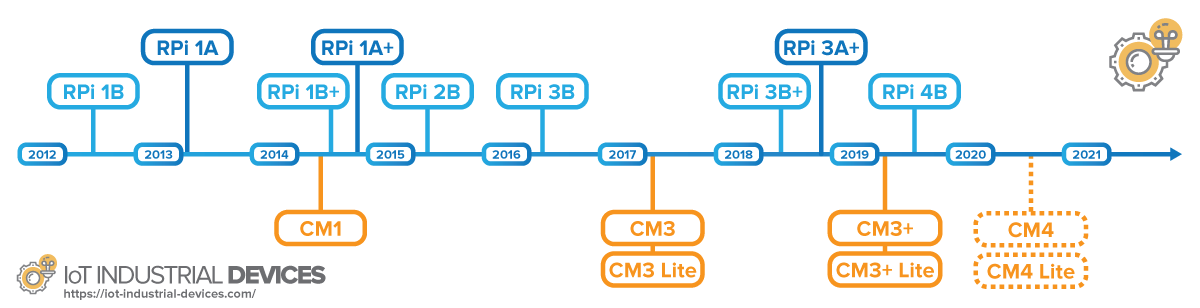
First Rasbperry Pi 1B model had it’s analogy in industrial Compute Module 1 after almost 2 years from it’s premiere. Compute Module 2 was probably omitted because the change from RPi1 to RPI2 mainly involved a minor change of the processor (Cortex-A7 900MHz), which was almost immediately replaced with Cortex-A53 1.2GHz in Raspberry Pi 3.

The premiere of Compute Module 3 occured a year after RPI 3 announcement, providing a significant boost of industrial market solutions. Since Raspberry Pi 4 was a great success in 2019, we might see it’s equivalent in industrial series of Raspberry Pi – Compute Module 4. A possible release date of Raspberry Pi’s Compute Module 4 is somewhere inbetween 2020/2021.

Raspberry Pi is gaining recognition in Industry

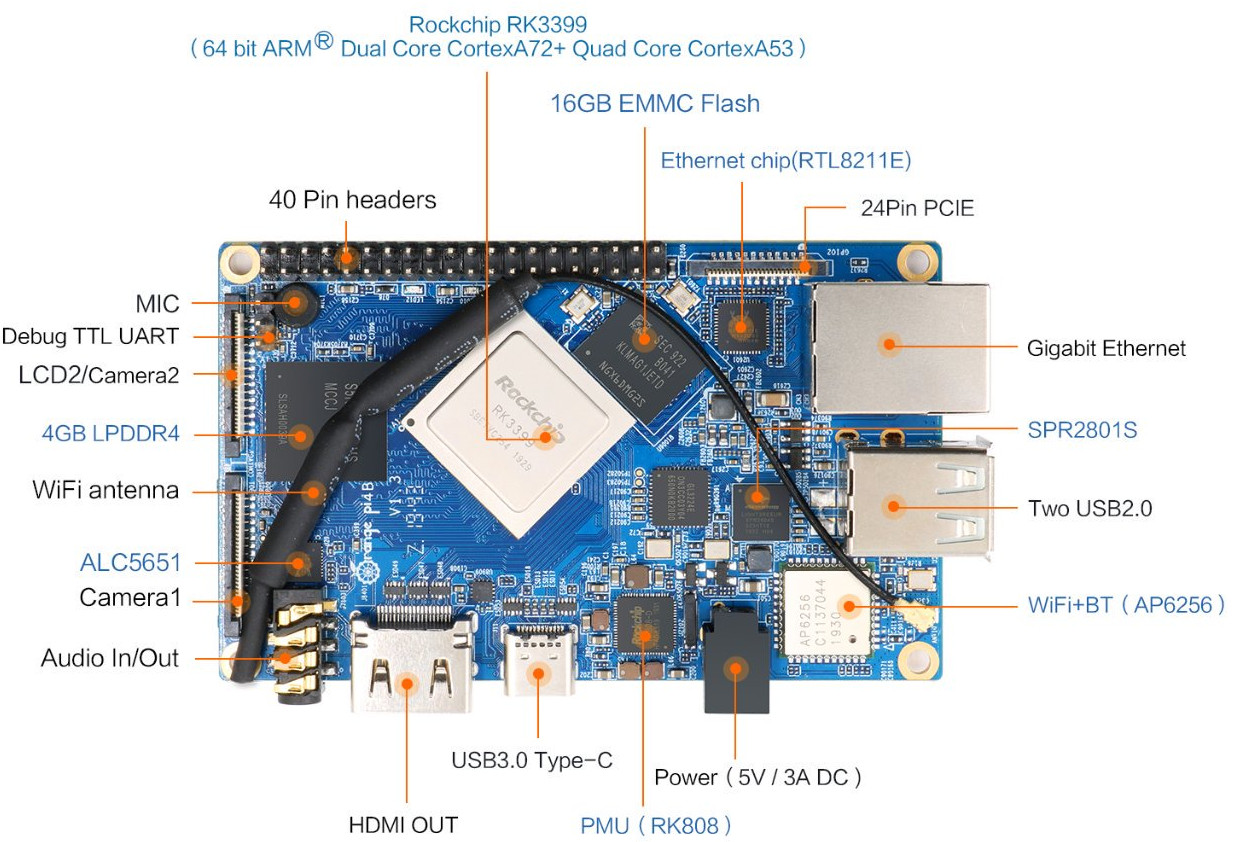
Almost a year ago, in the beginning of 2019, Raspberry Pi Foundation presented Raspberry Pi Compute Module 3+, a successor to previous CM3 version of development board, aimed at businesses and industrial users. The Compute Module uses a standard DDR2 SODIMM (small outline dual in-line memory module) form factor. GPIO and other I/O functions are routed through the 200 pins on the board.

Only a few months later, in June 2019, came big premiere of Raspberry Pi 4 Model B, the long-awaited successor of customer RPi3+. With new processor, larger RAM options and PCIe/NVMe support, CM4 might be a black horse of industrial automation in 2021.

It seems a matter of time before the Raspberry Pi Compute Module 3+ will get its own successor, called Compute Module 4, a new milestone of professional embedded IoT module. What might be the specification of this highly expected development board?
Raspberry Pi Compute Module 3+

Raspberry Pi Compute Module 4 probable specification

Compute Module 4 specifications probably will look like these:

  • Broadcom BCM2711, Quad core Cortex-A72 @ 1.5GHz will highly plausible replace previous Broadcom BCM2837B0, Cortex-A53 64-bit SoC @ 1.2GHz,
  • 1GB, 2GB or 4GB LPDDR4-3200 SDRAM will become a standard options, instead of fixed 1GB LPDDR2 SDRAM,
  • PCIe/NVMe support via single lane
  • Current flash memory (eMMC) options: 8GB / 16GB / 32GB from CM3+ will probably stay the same,
  • weight and factor will stay the same, to provide a possibility to upgrade current IoT applications of CM3 and CM3+

With much higher performance, the new Raspberry Pi Compute Module 4 will, for sure, support Gigabit Ethernet, USB 3.0 expansions with PCIe/NVMe single lane. We might even see wider working temperature range, if Raspberry Pi Foundation decides to make some hardware changes, to follow, for example, ESP32 – used in end-point IoT automation.

Industrial use of Compute Module

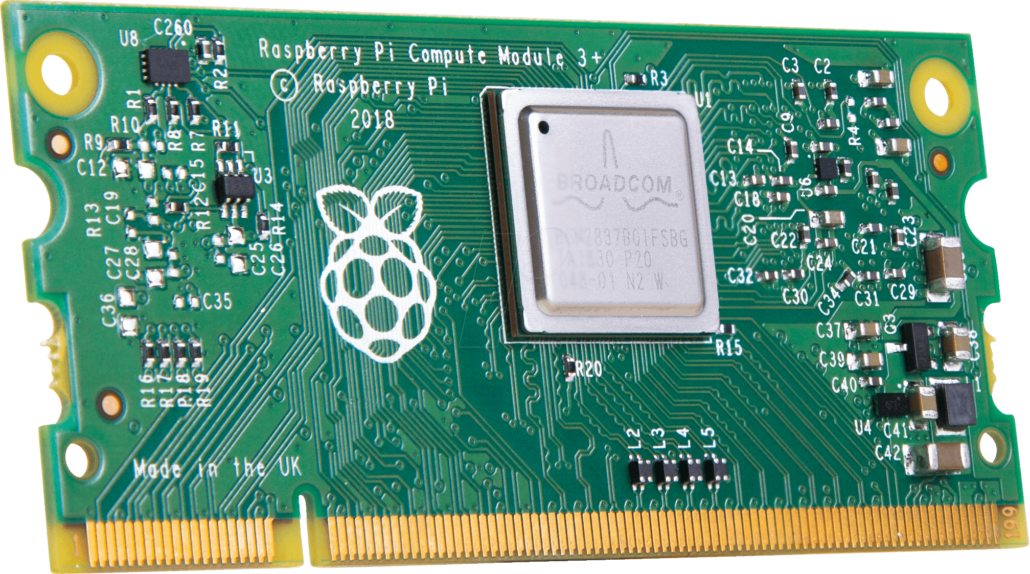
With Compute Module 3+ options from Raspberry Pi, TECHBASE upgraded their ModBerry 500/9500 industrial computers. From now on the ModBerry 500/9500 can be supported with extended eMMC, up to 32GB. Higher memory volume brings new features available for ModBerry series. Upcoming Raspberry Pi’s Compute Module 4 will be fully compatible with TECHBASE’s ModBerry 500/9500 controllers, oferring extended features.
 ModBerry 500 with Compute Module 3+
ModBerry 500 with Compute Module 3+

Higher performance of ModBerry 500/9500 with extended eMMC flash memory, up to 32GB , powered by quad-core Cortex A53 processor allows the device to smoothly run Windows 10 IoT Core system, opening up many possibilities for data management, remote control and visualisation.

Power Management HAT with RTC for Raspberry Pi

If you’re looking for a useful tool for long-lasting Raspberry Pi, such as longer battery life or automatic power on / off, this HAT power management is the perfect choice.

This HAT can significantly increase battery life by automatically starting the device for a certain time and automatically switching it off at another time. It can be configured to monitor the Raspberry Pi voltage / current status in real time and turn off the Pi according to the operating status. In addition, the kit includes a convenient power switch for easy on / off (soft shutdown of Pi by software), preventing data loss due to power disconnection.

Raspberry Pi Power Management HAT specification

  • MCU – Microchip ATmega328P-AU MCU
  • Storage – CAT24C32 EEPROM
  • USB – 1x micro USB port for serial communication via CP2102 UART to TTL chip
  • RPi Interface – 40-pin Raspberry Pi GPIO header
  • Misc
    • NXP PCF8523 RTC & calendar chip + CR1220 battery holder
    • DEBUG switch (9) to either:
      1. Power directly Raspberry Pi board
      2. Let the “Arduino” MCU manage the power supply
    • UART selection (15)
      • A – Access Arduino via USB to UART
      • B – Control the Raspberry Pi by Arduino
      • C – Access Raspberry Pi via USB to UART
    • Power/User and Reset buttons
    • Status and Power LEDs
  • Power Supply
    • PH2.0 connector for 7~28V regulated power supply or lithium battery
    • Monolithic Power MP1584 switching regulator
    • Protection circuits such as reverse-polarity, overcurrent, etc…
    • Voltage/current monitoring circuits
  • Dimensions – 65 x 56.5 mm (Raspberry Pi HAT)

Source: https://www.cnx-software.com/2019/12/18/raspberry-pi-power-management-hat-adds-rtc-battery-management-software-on-off/

Industrial use of Raspberry Pi Compute Module 3+

With Compute Module 3+ options from Raspberry Pi, TECHBASE upgraded their ModBerry 500/9500 industrial computers. From now on the ModBerry 500/9500 can be supported with extended eMMC, up to 32GB. Higher memory volume brings new features available for ModBerry series. One of the options is SuperCap power support.

 ModBerry 500 with Compute Module 3+
ModBerry 500 with Compute Module 3+

Higher performance of ModBerry 500/9500 with extended eMMC flash memory, up to 32GB , powered by quad-core Cortex A53 processor allows the device to smoothly run Windows 10 IoT Core system, opening up many possibilities for data management, remote control and visualisation.

Nowadays, mobile Internet offers are becoming more and more popular. They are often cost-effective for those who do not download too much from the web. Usually you don’t even need to sign a contract – some operators offer fairly favorable pre-paid internet offers. Anyway, even if we want an Internet contract, sometimes the monthly fee is lower if we do not take the device.

In that case, how will we receive this Internet? The solution is simple – unfortunately we have to invest some money in the LTE modem. As a router separating the signal we will use Raspberry Pi. For a ready and complete solution we can choose ModBerry Industrial IoT devices already equipped with modem of our choosing

ModBerry M500 modem configurability

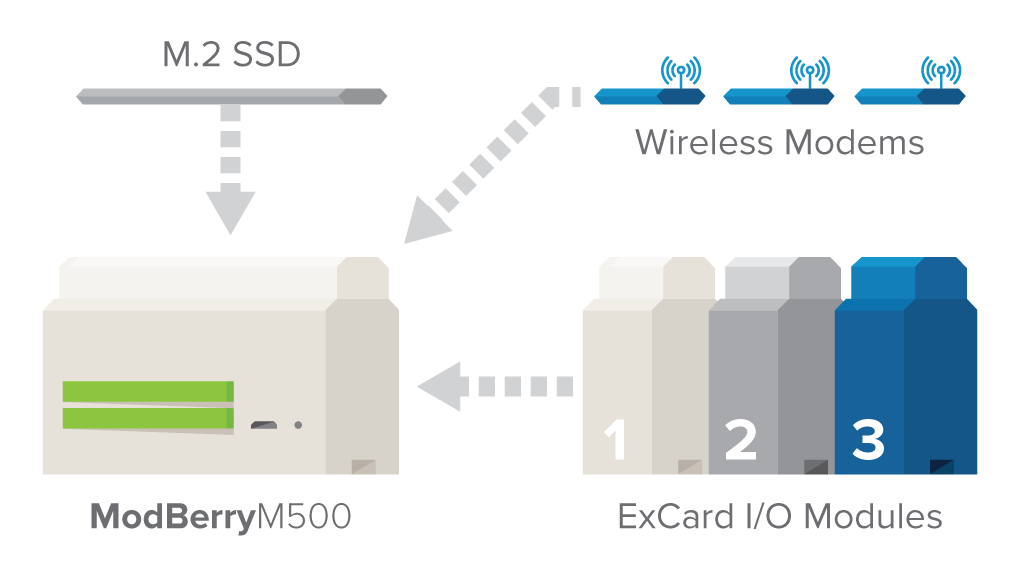
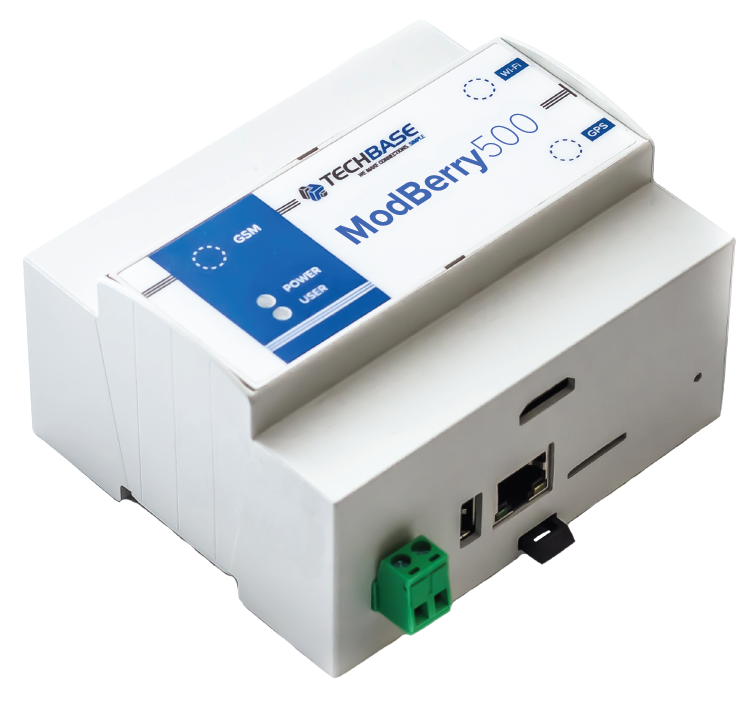
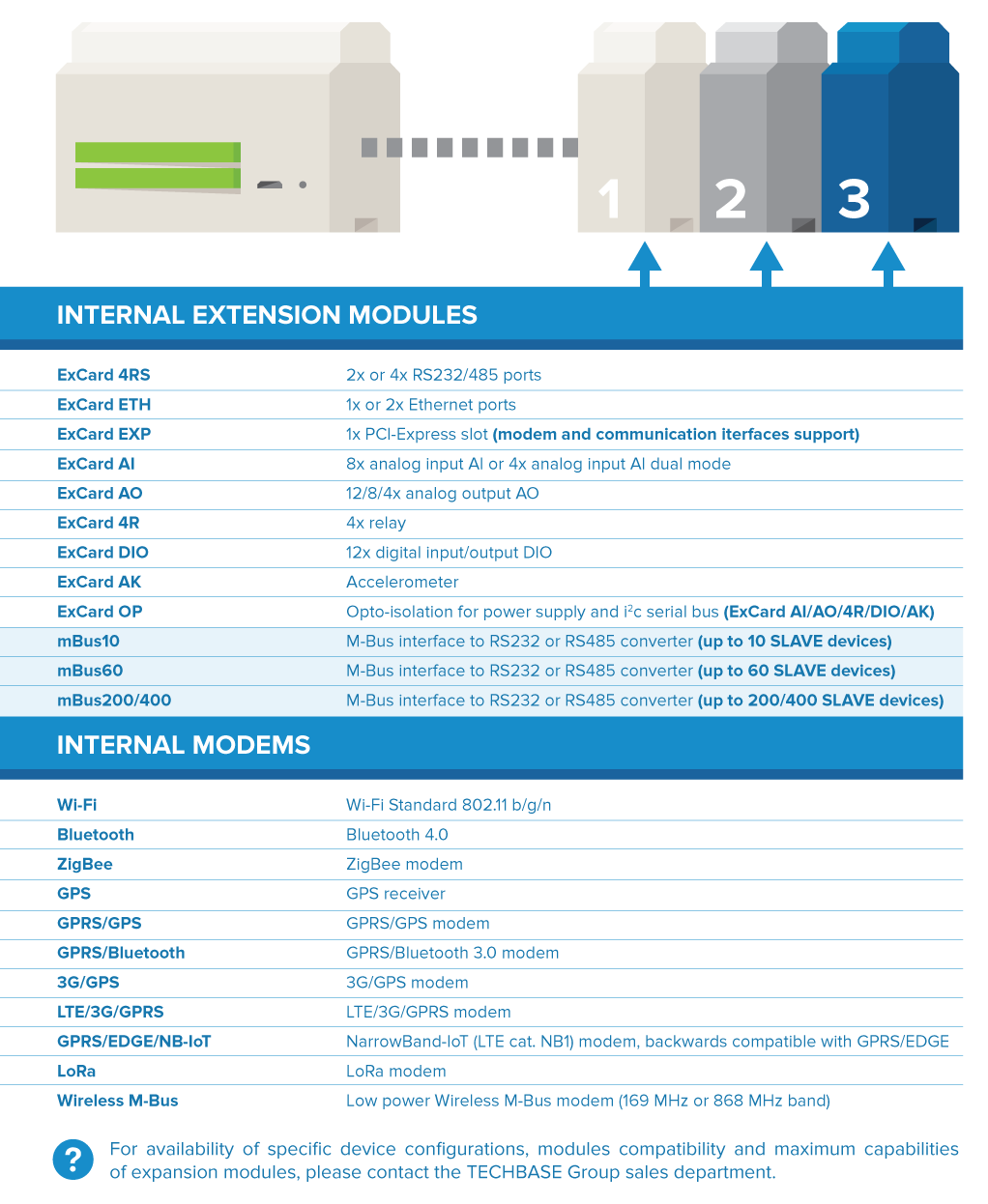
ModBerry M500 added wide range of I/Os to the board, including RS232/485 serial ports, digital and analog I/Os, 10/100Mbps Ethernet port, USB, 1-Wire and optional CAN. ModBerry series also offers additional wired interfaces and wireless communication modules with their proprietary modules called ExCard. The range of wireless modules include 3G/LTE, NarrowBand-IoT (NB-IoT), Wireless M-Bus, ZigBee, LoRa, Sigfox, Wi-Fi, Bluetooth and many more.

In 2017, TECHBASE Group introduced an industrial-grade automation controller, based on popular Raspberry Pi 3 board. The device called ModBerry M500 incorporated latest Raspberry Pi SBC and TECHBASE’s standard industrial board to enhance the capabilities of market RPi3.

ModBerry M500 added wide range of I/Os to the board, including RS232/485 serial ports, digital and analog I/Os, 10/100Mbps Ethernet port, USB, 1-Wire and optional CAN. ModBerry series also offers additional wired interfaces and wireless communication modules with their proprietary modules called ExCard. The range of wireless modules include 3G/LTE, NarrowBand-IoT (NB-IoT), Wireless M-Bus, ZigBee, LoRa, Sigfox, Wi-Fi, Bluetooth and many more.

Rasbperry Pi 4 upgrade of ModBerry M500

In 2019, with the premiere of Raspberry Pi 4, TECHBASE upgraded their ModBerry M500 device with the latest revision of this popular SBC, further enhancing the performance of their device. New 1.5GHz quad-core 64-bit ARM Cortex-A72 processor (approximately 3 times better performance than previous Cortex-A53 powering Raspberry Pi 3+ Model B and Compute Module 3 and 3+). ModBerry M500 can now be configured from 2GB / 4GB LPDDR4 SDRAM options.

Revised ModBerry M500 features Gigabit Ethernet, USB3.0, two microHDMI ports supporting OpenGL ES 3.x and 4Kp60 hardware decode of HEVC video. The device is fully compatible with previous versions of Rasbperry Pi based Industrial IoT devices and accessories from TECHBASE.

M.2 SSD support for ModBerry M500

Latest software update for Raspberrry Pi 4, now available in beta, makes it possible to boot directly from USB 3.0 connected drive, without the need for an SD card. With a possibility to run the OS directly from SSD is a massive breakthrough, allowing users to improve the performance of the system and data access speed.

ModBerry M500 offers now a feature to include M.2 SSD drive in industrial-grade device. The merge of industrial interfaces and SSD-boosted Raspberry Pi 4 is a perfect solution for on-site data management and gateway application.

ModBerry M500 roadmap for 2020+

Difficult times of coronavirus outbreak in early 2020 changed the expectations for new Industrial IoT devices. Slowed market needed some adjustments to overly expanded devices with reserve of not quite necessary features for different applications – often raising the price of the device.

New addition to ModBerry M series and Industrial IoT Ecosystem offered by TECHBASE Group is the revised ModBerry M500 Lite device, to ensure the full configurability of device’s resources.

ModBerry M500 Lite features:

  • Quad-core ARM Cortex-A72 1.5GHz processor
  • 2/4GB and new 8GB LPDDR4 RAM option
  • SSD M.2 support for mass storage boot
  • Industrial-grade enclosure with DIN-rail mount
  • RTC

ModBerry M500 Lite optional resources:

  • Serial RS232/422/485 ports
  • Digital and Analog I/Os
  • Relays
  • 10/100Mbps Ethernet
  • CAN, 1-Wire
  • M-Bus Master / Slave
  • TPM Security chip
  • OLED 0.96” screen
  • SuperCap UPS

New ModBerry M500 Lite not only is a versatile device with wide array of available optional resources, but also incredible fast with quad 1.5GHz processor, up to 8GB RAM and last but not least, M.2 SSD bootable drive for system, applications and rapid data availability, without the need to bootstrap an SD card. RTC with watchdog option and additional TPM Security chip ensures data safety and breach protection.

Pricing and availability of ModBerry M500 Lite

Price of the device is yet to be specified, but it will be significantly lower than standard ModBerry M500, which can be configured here. Preliminary devices are available to order – please contact our sales department via contact form or Live Chat at https://iiot-shop.com/ to receive a quotation for the configuration needed.

There are many small and compact Arm Linux SBCs, starting from the NanoPi NEO to the Raspberry Pi Zero or Rock Pi S, but lately a smaller board based on the MStar MSC313E Cortex-A7 SoC from BreadBee with a 64MB RAM appeared, enough to run embedded Linux.

Despite MStar MSC313E being a camera processor, the camera interface does not seem exposed in the board, so it looks to be designed to control I/Os over Ethernet. There’s no WiFi for now, but there may eventually be a future model that replaced the Ethernet jack with an Ampak WiFi module.

Source: https://www.cnx-software.com/2020/04/14/breadbee-tiny-embedded-linux-sbc-mstar-msc313e-camera-soc/

BreadBee specifications:

  • SoC – MStar MSC313E Arm Cortex-A7 processor @ ~1.0 GHz with NEON, FPU, 64MB DDR2
  • Storage – 16MB SPI NOR flash
  • Networking – 10/100M Ethernet (RJ45)
  • USB – 1x Micro USB 2.0 port
  • Expansion
    • 24-pin dual-row header (2.54mm pitch) with  SPI, I2C, 4x 10-bit ADC, 3x UART, GPIOs
    • 21-pin header (1.27mm pitch) with SD/SDIO, USB 2.0, GPIOs
  • Misc – RTC, Watchdog timer
  • Power Supply – 5V via micro USB port
  • Dimensions – 32 x 30mm

Source: https://www.cnx-software.com/2020/04/14/breadbee-tiny-embedded-linux-sbc-mstar-msc313e-camera-soc/

Raspberry Pi increase in IoT significance

More and more engineers and technology providers believe that it is suitable for industrial applications in the real world. Over the past few years, there has been a lot of discussion about the use of Raspberry Pi in industry, most of which emphasize that Raspberry Pi is a great tool for engineering experiments, but not so much for industrial applications in the real world. While it is true that the Raspberry Pi is not considered the best choice for mission-critical applications, it is also true that the Raspberry Pi is no longer a platform for experimentation.

Latest Raspberry Pi 4 development board, equipped with a 1.5GHz quad-core 64-bit ARM Cortex-A72 processor (approximately 3 times better performance than previous Cortex-A53 powering Raspberry Pi 3+ Model B and Compute Module 3 and 3+). can be chosen from 1GB / 2GB / 4GB LPDDR4 SDRAM options.

Raspberry Pi 4 continues the tradition of one of the most versatile and cheapest computer devices. It can be used for virtually anything from proprietary IoT solutions to a full-fledged desktop computer. The new Malinka has two micro-HDMI ports, a Gigabit Ethernet port, two USB 3.0 type A ports and two USB 2.0 type A ports.

Industrial use of Raspberry Pi 4

A year ago, TECHBASE released an updated version of the ModBerry M500 industrial IoT computer, replacing the aging Raspberry Pi 3 with a 3B+, giving it better performance. With the recent launch of the Raspberry Pi 4, TECHBASE has yet again, announced another upgrade to the M500, which now packs the latest single-board computer.

Raspberry Pi 4, with 2xHDMI, Gigabit Ethernet and 2xUSB3.0

Over 10 million Raspberry Pi’s have been sold and the Raspberry Pi is likely to stay as a new standard in the industry. Official Raspbian OS is free operating system based on Linux Debian optimized for the Raspberry Pi comes with over 35,000 packages, pre-compiled software bundled in a nice format for easy installation. ModBerry devices are compatible with Raspberry Pi accessories, supported by Raspberry Pi Foundation. ModBerry M500 now with Raspberry Pi 3 Model B+ / Raspberry Pi 4 Model B support.

In 2019, with the premiere of Raspberry Pi 4, TECHBASE upgraded their ModBerry M500 device with the latest revision of this popular SBC, further enhancing the performance of their device. New 1.5GHz quad-core 64-bit ARM Cortex-A72 processor (approximately 3 times better performance than previous Cortex-A53 powering Raspberry Pi 3+ Model B and Compute Module 3 and 3+). ModBerry M500 can now be configured from 2GB / 4GB and new 8GB option of LPDDR4 SDRAM.

Revised ModBerry M500 features Gigabit Ethernet, USB3.0, two microHDMI ports supporting OpenGL ES 3.x and 4Kp60 hardware decode of HEVC video. The device is fully compatible with previous versions of Rasbperry Pi based Industrial IoT devices and accessories from TECHBASE.

Pricing and availability of 8GB RAM and M.2/SSD options

ModBerry M500 8GB option has been added to configurator here. SSD/M.2 option is currently undergoing testing – preliminary devices are available on demand, via Live Chat or contact form at https://iiot-shop.com/

Upcoming Raspberry Pi Compute Module 4 possible release date

UPDATE 22.10.20: ModBerry 500, first industrial computer based on Compute Module 4, available for pre-order

TECHBASE’s ModBerry industrial computer series has received an update to Compute Module 4 and is available for pre-orders. TECHBASE is leading manufacturer of Industrial Raspberry Pi and Industrial Compute Module solutions. ModBerry 500 series is fully compatible with all releases of Compute Module from Rasbperry Pi foundation.

Main features of updated device are:

  • up to 4x faster eMMC Flash with up to 32GB storage
  • up to 2x faster performance of CPU apllications than previous CM3 version
  • up to 8x more RAM (8GB LPDDR4)
  • optional 1Gbit Ethernet interface
  • optional PCIe card support for NVMe SSD drive (via M.2)
  • optional second PCIe support for wireless modem solutions

First orders will be ready with subject to the availability of the CM4 module itself.

Update on Raspberry Pi’s Compute Module 4 features [15.10.2020]

According to latest leaks about Compute Module 4 specifiaction and features we can be more than sure that:

  • New Compute Module will feature Wi-Fi and Bluetooth on-board! Raspberry Pi Compute Module series will probably include versions with and without these modems to provide modules for variety of industrial applications.
  • PCI-Express line will be available externally to enable extension support via PCIe
  • Ethernet support will be enabled, most probably 1Gbps, since it is a standard in latest Raspberry Pi 4B.
  • 5x UART will be available to Compute Module 4 users

Compute Module 4 a new milestione in Industrial IoT

A new milestone of Industrial IoT might come to life in this year. The successor of Raspberry Pi Compute Module 3+, working named Compute Module 4, will certainly draw from Raspberry Pi 4 B features, such as new Cortex-A72 processor (Broadcom BCM2711) and multiple RAM/eMMC options. Rumours say, that we may also see Gigabit Ethernet and USB3.0/3.1 support, since it was a main drawback in previous models.

Upcoming Raspberry Pi Compute Module 4 possible release date
Raspberry Pi release timeline with probable Compute Module 4 release date

First Rasbperry Pi 1B model had it’s analogy in industrial Compute Module 1 after almost 2 years from it’s premiere. Compute Module 2 was probably omitted because the change from RPi1 to RPI2 mainly involved a minor change of the processor (Cortex-A7 900MHz), which was almost immediately replaced with Cortex-A53 1.2GHz in Raspberry Pi 3.

The premiere of Compute Module 3 occured a year after RPI 3 announcement, providing a significant boost of industrial market solutions. Since Raspberry Pi 4 was a great success in 2019, we might see it’s equivalent in industrial series of Raspberry Pi – Compute Module 4. A possible release date of Raspberry Pi’s Compute Module 4 is mid-2020.

Raspberry Pi is gaining recognition in Industry

Almost a year ago, in the beginning of 2019, Raspberry Pi Foundation presented Raspberry Pi Compute Module 3+, a successor to previous CM3 version of development board, aimed at businesses and industrial users. The Compute Module uses a standard DDR2 SODIMM (small outline dual in-line memory module) form factor. GPIO and other I/O functions are routed through the 200 pins on the board.

Raspberry Pi Compute Module 3+

Only a few months later, in June 2019, came big premiere of Raspberry Pi 4 Model B, the long-awaited successor of customer RPi3+. With new processor, larger RAM options and many input/output changes, became new standard in small, embedded PC world.

It seems a matter of time before the Raspberry Pi Compute Module 3+ will get its own successor, probably called Compute Module 4, a new milestone of professional embedded IoT module. What might be the specification of this highly expected development board?

Raspberry Pi Compute Module 4 specification forecast

Compute Module 4 specifications probably will look like these:

  • Broadcom BCM2711, Quad core Cortex-A72 @ 1.5GHz will highly plausible replace previous Broadcom BCM2837B0, Cortex-A53 64-bit SoC @ 1.2GHz,
  • 1GB, 2GB or 4GB LPDDR4-3200 SDRAM will become a standard options, instead of fixed 1GB LPDDR2 SDRAM,
  • Current flash memory (eMMC) options: 8GB / 16GB / 32GB from CM3+ will probably stay the same,
  • H.265 (4kp60 decode), H264 (1080p60 decode, 1080p30 encode) might replace outdated H.264 (1080p30)
  • and OpenGL ES 3.0 graphics will replace 1.1, 2.0 versions,
  • weight and factor will stay the same, to provide a possibility to upgrade current IoT applications of CM3 and CM3+

A Lite 4 version of Compute Module is to be expected too, without eMMC and probably limited SDRAM options.

With much higher performance, the new Raspberry Pi Compute Module 4 will, for sure, support Gigabit Ethernet, USB 3.0 expansions. We might even see wider working temperature range, if Raspberry Pi Foundation decides to make some hardware changes, to follow, for example, ESP32 – used in end-point IoT automation.

Industrial use of Compute Module

With Compute Module 3+ options from Raspberry Pi, TECHBASE upgraded their ModBerry 500/9500 industrial computers. From now on the ModBerry 500/9500 can be supported with extended eMMC, up to 32GB. Higher memory volume brings new features available for ModBerry series.

 ModBerry 500 with Compute Module 3+
ModBerry 500 with Compute Module 3+

Higher performance of ModBerry 500/9500 with extended eMMC flash memory, up to 32GB , powered by quad-core Cortex A53 processor allows the device to smoothly run Windows 10 IoT Core system, opening up many possibilities for data management, remote control and visualisation.
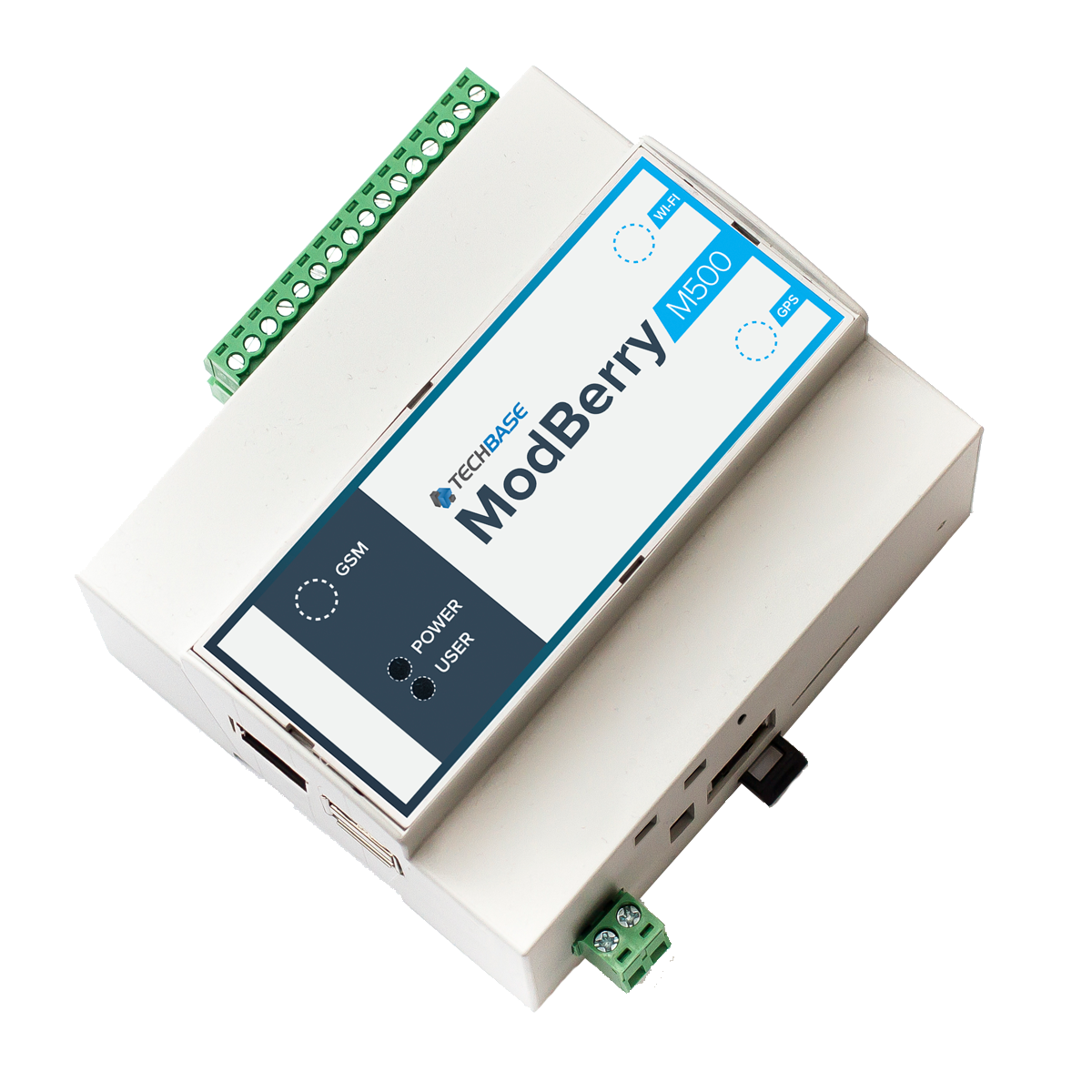
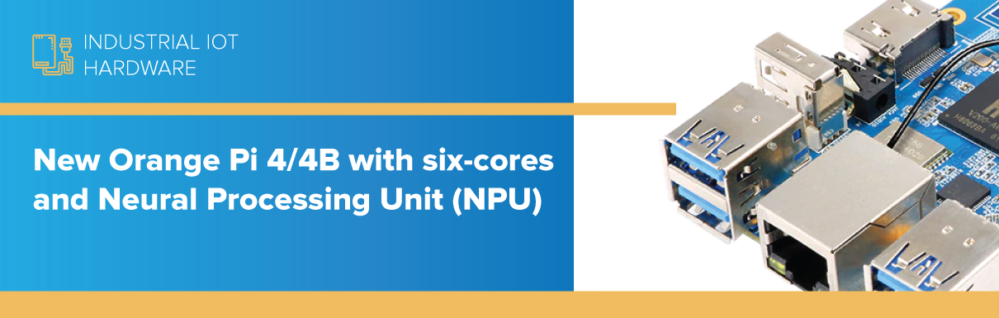
New Orange Pi 4/4B with six-cores and Neural Processing Unit (NPU)

Shenzhen Xunlong Software recently introduced a new Orange Pi microcomputer. According to information provided by the Chinese company, the Orange Pi 4 measures 91 x 56 mm and features a Rockchip K3399 six-core system-on-chip SoC (ARM Mali-T860 MP4 GPU, 4GB of LPDDR4 memory, 16GB of storage). eMMC (expandable via a microSD card), a 24-pin connector, and a 40-pin General-purpose input / output (GPIO) connector.

Orange Pi 4 six-core system
Orange Pi 4B with Neural Processing Unit (NPU)

This microcomputer is also equipped with two camera connectors, one USB 3.0 jack, two USB 2.0 jacks, one USB 3.0 Type-C jack, HDMI 2.0, Gigabit Ethernet and 3.5mm audio jacks, and includes support for Wi-Fi 802.11ac and Bluetooth 4.1 LE.

The secondly introduced Orange Pi 4B model includes a Gyrfalcon Lightspeeur SPR2801S Neural Processing Unit (NPU), two USB 2.0 sockets, as well as a USB 3.0 Type-C socket.

Orange Pi 4/4B preliminary specifications:

  • SoC – Rockchip K3399 hexa-core big.LITTLE processor with two Arm Cortex A72 cores, four Cortex A53 cores, and an ARM Mali-T860 MP4 GPU with support for OpenGL 1.1 to 3.1 support, OpenVG1.1, OpenCL and DX 11
  • System Memory – 4 GB LPDDR4
  • Storage – 16 GB eMMC flash, micro SD card
  • NPU (Orange Pi 4B only) – Gyrfalcon Lightspeeur SPR2801S NPU delivering up to 2.8TOPS @ 300mW, 5.6 TOPS @ 100 MHz (peak performance)
  • Video Output/Display Interface
    • HDMI 2.0 up to 4K @ 60 Hz
    • LCD connector for MIPI DSI display
    • USB-C port with DisplayPort Alternate mode
  • Video Decode – 4K VP9 and 10-bit H.265 video codec support up to 60 fps
  • Audio – 3.5mm audio jack for headphones; HDMI digital audio output; built-in microphone; ALC5651 codec
  • Connectivity – Gigabit Ethernet port (via  RTL8211E transceiver), dual-band 802.11ac 2×2 MIMO WiFi and Bluetooth 5.0 (Ampak AP6256 module)
  • USB
    • Orange Pi 4 – 1x USB 3.0 port, 2x USB 2.0 host ports, 1x USB 3.0 type C port
    • Orange Pi 4B – 2x USB 2.0 host ports, 1x USB 3.0 type C port
  • Camera – 2x camera headers
  • Debugging – 3-pin serial header
  • Expansion
    • 40-pin GPIO 2.54mm pitch female header with 2x I2C, 1x SPI/UART, 8x GPIO, etc…
    • 24-pin connector for PCIe signals
  • Power Supply
    • 5V/3A via DC jack
    • 5V via type C portRK808 PMU
  • Dimensions – 91 x 56 mm

Source: https://www.cnx-software.com/2019/11/19/orange-pi-4-4b-sbc-rockchip-rk3399-soc-gyrfalcon-2801s-npu/

Industrial use of previous OrangePi development boards

Introduced in November 2017, the ModBerry M300 series, based on NanoPi NEO revolutionised the economic segment of Industrial IoT devices and proved, that automation and monitoring can be done effectively with low expenditure on industrial installations.

ModBerry M300 O1 based on OrangePi Zero Plus features Allwinner H5 (Quad-core Cortex-A53) SoC, moderate 512MB RAM, storage memory option with microSD slot, USB and Gigabit Ethernet port. The wireless communication is supported with onboard Wi-Fi module.

Offering much higher performance and wider feature range, the ModBerry M300 O2 features same SoC as M300 series, but thanks to OrangePi Zero Plus2 means, the device is equipped with onboard 8GB eMMC, extra microSD expansion slot as alternative and wired/wireless interfaces, e.g. HDMI, Wi-Fi, Bluetooth 4.0.

How Raspberry Pi Compute Module 4 might help IoT & Industrial Automation?

UPDATE 22.10.20: ModBerry 500 with Compute Module 4 available for pre-order

TECHBASE’s ModBerry industrial computer series has received an update to Compute Module 4 and is available for pre-orders. TECHBASE is leading manufacturer of Industrial Raspberry Pi and Industrial Compute Module solutions. ModBerry 500 series is fully compatible with all releases of Compute Module from Rasbperry Pi foundation.

Main features of updated device are:

  • up to 4x faster eMMC Flash with up to 32GB storage
  • up to 2x faster performance of CPU apllications than previous CM3 version
  • up to 8x more RAM (8GB LPDDR4)
  • optional 1Gbit Ethernet interface
  • optional PCIe card support for NVMe SSD drive (via M.2)
  • optional second PCIe support for wireless modem solutions

First orders will be ready with subject to the availability of the CM4 module itself.

Update on Raspberry Pi’s Compute Module 4 features [15.10.2020]

According to latest leaks about Compute Module 4 specifiaction and features we can be more than sure that:

  • New Compute Module will feature Wi-Fi and Bluetooth on-board! Raspberry Pi Compute Module series will probably include versions with and without these modems to provide modules for variety of industrial applications.
  • PCI-Express line will be available externally to enable extension support via PCIe
  • Ethernet support will be enabled, most probably 1Gbps, since it is a standard in latest Raspberry Pi 4B.
  • 5x UART will be available to Compute Module 4 users

Compute Module & Industrial IoT symbiosis

It a matter of time before we will see Raspberry Pi Compute Module 3+ successor, probably called Compute Module 4, a new milestone of professional embedded IoT module. What might be the specification of this highly expected development board? What changes will it bring to Industrial use of IoT?

We are witnessing the fourth industrial revolution. Its key element is to create systems of interconnected sensors and actuators that operate within one global network. The so-called Internet of Things, unlike the consumer market, meet much more difficult requirements. To be able to meet harsh industrial expectations, many automation companies have already begun to offer solutions especially tailored to the application of the Internet of Things in Industry 4.0.

Although it may seem quite obvious nowadays, it is worth to be aware that just a few years ago such algorithms were practically not implemented at all in small consumer devices. It was only when people got used to smartphones that the idea of ubiquitous communication and adaptation of the way the system or device works to the environment became understandable. In fact, this confirms the validity of the idea of the Internet of Things as an important direction in the development of electronics – and in practice also automation.

Raspberry Pi is gaining recognition in Industry

Almost a year ago, in the beginning of 2019, Raspberry Pi Foundation presented Raspberry Pi Compute Module 3+, a successor to previous CM3 version of development board, aimed at businesses and industrial users. The Compute Module uses a standard DDR2 SODIMM (small outline dual in-line memory module) form factor. GPIO and other I/O functions are routed through the 200 pins on the board.

Raspberry Pi Compute Module 3+

Only a few months later, in June 2019, came big premiere of Raspberry Pi 4 Model B, the long-awaited successor of customer RPi3+. With new processor, larger RAM options and many input/output changes, became new standard in small, embedded PC world.

It seems a matter of time before the Raspberry Pi Compute Module 3+ will get its own successor, probably called Compute Module 4, a new milestone of professional embedded IoT module. What might be the specification of this highly expected development board?

Raspberry Pi Compute Module 4 specification forecast

Compute Module 4 specifications probably will look like these:

  • Broadcom BCM2711, Quad core Cortex-A72 @ 1.5GHz will highly plausible replace previous Broadcom BCM2837B0, Cortex-A53 64-bit SoC @ 1.2GHz,
  • 1GB, 2GB or 4GB LPDDR4-3200 SDRAM will become a standard options, instead of fixed 1GB LPDDR2 SDRAM,
  • Current flash memory (eMMC) options: 8GB / 16GB / 32GB from CM3+ will probably stay the same,
  • H.265 (4kp60 decode), H264 (1080p60 decode, 1080p30 encode) might replace outdated H.264 (1080p30)
  • and OpenGL ES 3.0 graphics will replace 1.1, 2.0 versions,
  • weight and factor will stay the same, to provide a possibility to upgrade current IoT applications of CM3 and CM3+

A Lite 4 version of Compute Module is to be expected too, without eMMC and probably limited SDRAM options.

With much higher performance, the new Raspberry Pi Compute Module 4 will, for sure, support Gigabit Ethernet, USB 3.0 expansions. We might even see wider working temperature range, if Raspberry Pi Foundation decides to make some hardware changes, to follow, for example, ESP32 – used in end-point IoT automation.

Industrial use of Compute Module

With Compute Module 3+ options from Raspberry Pi, TECHBASE upgraded their ModBerry 500/9500 industrial computers. From now on the ModBerry 500/9500 can be supported with extended eMMC, up to 32GB. Higher memory volume brings new features available for ModBerry series.

 ModBerry 500 with Compute Module 3+
ModBerry 500 with Compute Module 3+

Higher performance of ModBerry 500/9500 with extended eMMC flash memory, up to 32GB , powered by quad-core Cortex A53 processor allows the device to smoothly run Windows 10 IoT Core system, opening up many possibilities for data management, remote control and visualisation.
TECHBASE updates M500 devices with Raspberry Pi 4

The newest addition to TECHBASE’s Industrial IoT Ecosystem is an updated ModBerry M500 with latest Raspberry Pi 4 development board, equipped with a 1.5GHz quad-core 64-bit ARM Cortex-A72 processor (approximately 3 times better performance than previous Cortex-A53 powering Raspberry Pi 3+ Model B and Compute Module 3 and 3+). ModBerry M500 can be configured from 1GB / 2GB / 4GB LPDDR4 SDRAM options.

Gigabit Ethernet & USB 3.0 on-board

Another new and appreciated feature is an upgrade to full-throughput Gigabit Ethernet for fast network connection and 2x USB 3.0 / 2x USB 2.0 for additional I/O, data storage extension and fast wireless modem support. ModBerry M500 with Rasbperry Pi 4 has dual-band 802.11ac Wi-Fi and Bluetooth 5.0 on-board. For additional wireless networks expansions, you can choose from variety of Industrial IoT modems from TECHBASE offer, incl. 3G/LTE, NarrowBand-IoT (NB-IoT), Wireless M-Bus, ZigBee, LoRa, Sigfox, Wi-Fi, Bluetooth and many more.

Enhanced Video support for RPi4

The full HDMI port has been replaced with two microHDMI ports with dual monitor support, at resolutions up to 4K, VideoCore VI graphics, supporting OpenGL ES 3.x and 4Kp60 hardware decode of HEVC video. The device is fully compatible with previous versions of Rasbperry Pi based Industrial IoT devices and accessories from TECHBASE.

Raspberry Pi 3 Model B Modberry M500

Raspberry Pi 4 based ModBerry M500 availability

New ModBerry M500 with three variants of Raspberry Pi 4 based devices is available for pre-orders via https://iiot-shop.com/product/modberry-m-series/ For specific delivery time please contact us via e-mail or Live Chat, directly at Industrial IoT Shop.