Wpisy

LoRa vs NarrowBand-IoT. What is better for Industrial IoT?

Low-power wide-area (LPWA) technology meets the needs of multiple IoT markets for low-cost devices that maintain long battery life and low-cost, large-area networks that support large numbers of connections. However, LoRa (LoRaWAN) and NarrowBand-IoT have the most momentum and will gain the largest share in the LPWA market in the next few years.

Many technology articles compare LoRa and NB-IoT technologies as if they were battling it out for dominance in the IoT market. In reality, these technologies are two branches within an emerging technology ecosystem. Similar to WiFi and Bluetooth, they will most likely to diverge into different niches, rather than directly compete with each other. This article will dive deeper into the capabilities, costs, longevity, maturity, and other differentiators of NB-IoT and LoRa-based technology.

Source: https://www.linkedin.com/pulse/nb-iot-vs-lora-its-ecosystem-race-art-reed

Sigfox/LoRa and NB-IoT in direct comparison

As a result of the research, performed by Tauron, it was found that SigFox and LoRaWAN technologies have limited applications due to the use of the unlicensed ISM band (868 MHz). In addition, each of the three technologies tested has a limit on the transmission channel speed. LoRaWAN, unlike others, allows the construction of an autonomous, separate network dedicated to the needs of the owner.

LTE NarrowBand-IoT technology, as a 3GPP standard, is being increasingly implemented by subsequent mobile operators in the world and in European countries like Poland. For example, polish main frequencies of NB-IoT implementation are 800 MHz and 900 MHz, which allows achieving high coverage of the country.

Research carried out by Tauron has shown that, considering the security of the solution, the availability of telecommunications infrastructure, or the speed of data transmission (important for meter reading), LTE NB IoT technology is closest to use in the energy sector.

Source: https://www.telko.in/tauron-lepiej-ocenia-nb-iot-niz-lora-i-sigfox

Both LoRa and NB-IoT standards were developed to improve security, power efficiency, and interoperability for IoT devices. Each features bidirectional communication (meaning the network can send data to the IoT device, and the IoT device can send data back), and both are designed to scale well, from a few devices to millions of devices.

Source: https://www.linkedin.com/pulse/nb-iot-vs-lora-its-ecosystem-race-art-reed

Use of LoRa/NB-IoT in industrial automation

Use of wireless connection makes life and work easier for us every day – from radio stations and GSM to Wi-Fi wireless networks, Zigbee, short-range Bluetooth connectivity and LoRa / NarrowBand-IoT wireless solutions. With the spread of internet access, the possibility of using wireless connectivity for a new type of service and application has opened.
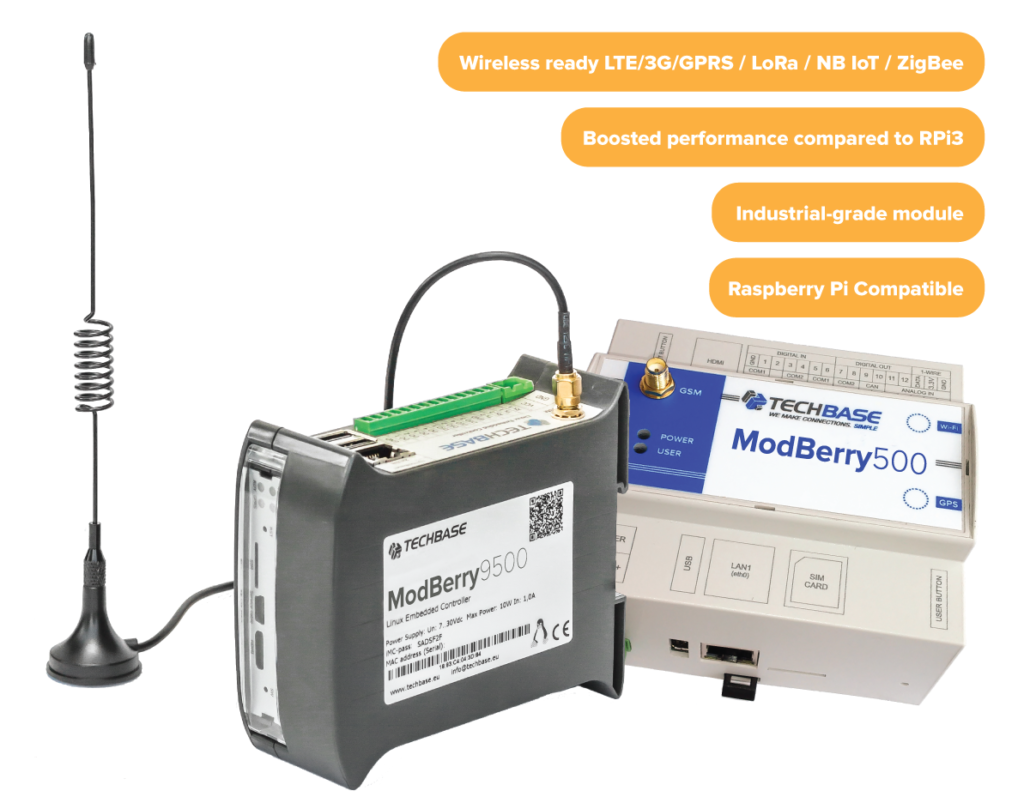
ModBerry 500 / ModBerry 9500

Device equipped with LoRa module is delivered with a LoRaWAN protocol stack, so it can be easily connected to the existing, fast-growing LoRa Alliance infrastructure – both in privately managed local area networks (LAN) and public telecommunications networks to create wide area low power WAN (LPWAN) on a national scale. LoRaWAN stack integration also allows connection to any microcontroller, such as ModBerry industrial device from TECHBASE. Such solutions offer also NarrowBand-IoT and full 4G/LTE support.
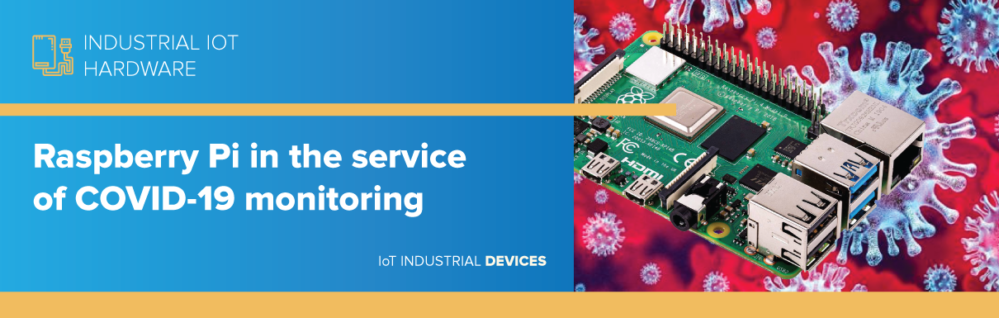
Raspberry Pi in the service of COVID-19 monitoring

Raspberry Pi devices are often used by scientists, especially for capturing and analyzing biological data. A particularly noteworthy sober project has published news this week.

According to the researchers at UMass Amherst, FluSense is about the size of a dictionary. Includes an inexpensive microphone set, heat sensor, Raspberry Pi and Intel Movidius 2 neural engine. The idea is to use AI on the edge to classify audio samples and determine the number of people in a room at any given time.

Image courtesy of the University of Massachusetts Amherst

We believe that FluSense has the potential to expand the arsenal of health surveillance tools used to forecast seasonal flu and other viral respiratory outbreaks, such as the COVID-19 pandemic or SARS,” Rahman told TechCrunch. “By understanding the ebb and flow of the symptoms dynamics across different locations, we can have a better understanding of the severity of a novel infectious disease and that way we can enforce targeted public health intervention such as social distancing or vaccination.

Source: https://www.networkworld.com/article/3534101/covid-19-vs-raspberry-pi-researchers-bring-iot-technology-to-disease-detection.html

Crowd monitoring with Raspberry Pi

The device distinguishes cough from other sounds. By combining cough data with information about the size of the crowd at your location, you can get an index that predicts the number of people who may be experiencing flu symptoms.

Currently we are planning to deploy the FluSense system in several large public spaces (e.g., large cafeteria, classroom, dormitories, gymnasium, auditorium) to capture syndromic signals from a broad range of people who live in a certain town or city,” they said. “We are also looking for funding to run a large-scale multi-city trial. In the meantime, we are also diversifying our sensing capability by extending FluSense’s capability to capture more syndromic signals (e.g., recently we added sneeze sensing capability to FluSense). We definitely see a significant level of commercialization potential in this line of research.

https://www.raspberrypi.org/blog/flusense-takes-on-covid-19-with-raspberry-pi/
Upcoming Raspberry Pi Compute Module 4 possible release date

UPDATE 22.10.20: ModBerry 500, first industrial computer based on Compute Module 4, available for pre-order

TECHBASE’s ModBerry industrial computer series has received an update to Compute Module 4 and is available for pre-orders. TECHBASE is leading manufacturer of Industrial Raspberry Pi and Industrial Compute Module solutions. ModBerry 500 series is fully compatible with all releases of Compute Module from Rasbperry Pi foundation.

Main features of updated device are:

  • up to 4x faster eMMC Flash with up to 32GB storage
  • up to 2x faster performance of CPU apllications than previous CM3 version
  • up to 8x more RAM (8GB LPDDR4)
  • optional 1Gbit Ethernet interface
  • optional PCIe card support for NVMe SSD drive (via M.2)
  • optional second PCIe support for wireless modem solutions

First orders will be ready with subject to the availability of the CM4 module itself.

Update on Raspberry Pi’s Compute Module 4 features [15.10.2020]

According to latest leaks about Compute Module 4 specifiaction and features we can be more than sure that:

  • New Compute Module will feature Wi-Fi and Bluetooth on-board! Raspberry Pi Compute Module series will probably include versions with and without these modems to provide modules for variety of industrial applications.
  • PCI-Express line will be available externally to enable extension support via PCIe
  • Ethernet support will be enabled, most probably 1Gbps, since it is a standard in latest Raspberry Pi 4B.
  • 5x UART will be available to Compute Module 4 users

Compute Module 4 a new milestione in Industrial IoT

A new milestone of Industrial IoT might come to life in this year. The successor of Raspberry Pi Compute Module 3+, working named Compute Module 4, will certainly draw from Raspberry Pi 4 B features, such as new Cortex-A72 processor (Broadcom BCM2711) and multiple RAM/eMMC options. Rumours say, that we may also see Gigabit Ethernet and USB3.0/3.1 support, since it was a main drawback in previous models.

Upcoming Raspberry Pi Compute Module 4 possible release date
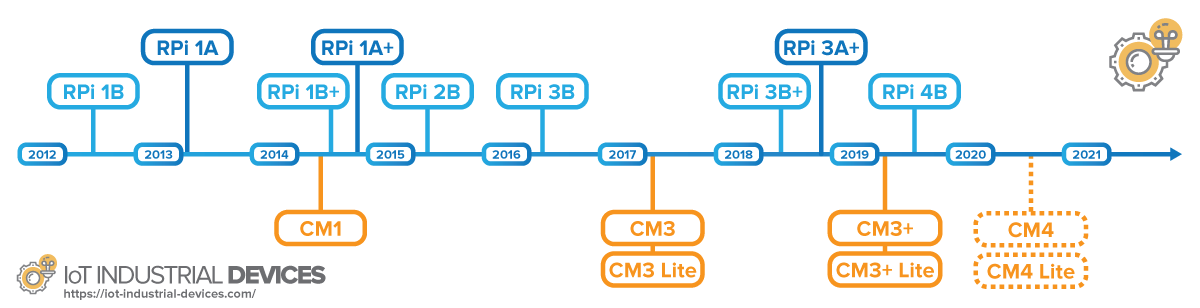
Raspberry Pi release timeline with probable Compute Module 4 release date

First Rasbperry Pi 1B model had it’s analogy in industrial Compute Module 1 after almost 2 years from it’s premiere. Compute Module 2 was probably omitted because the change from RPi1 to RPI2 mainly involved a minor change of the processor (Cortex-A7 900MHz), which was almost immediately replaced with Cortex-A53 1.2GHz in Raspberry Pi 3.

The premiere of Compute Module 3 occured a year after RPI 3 announcement, providing a significant boost of industrial market solutions. Since Raspberry Pi 4 was a great success in 2019, we might see it’s equivalent in industrial series of Raspberry Pi – Compute Module 4. A possible release date of Raspberry Pi’s Compute Module 4 is mid-2020.

Raspberry Pi is gaining recognition in Industry

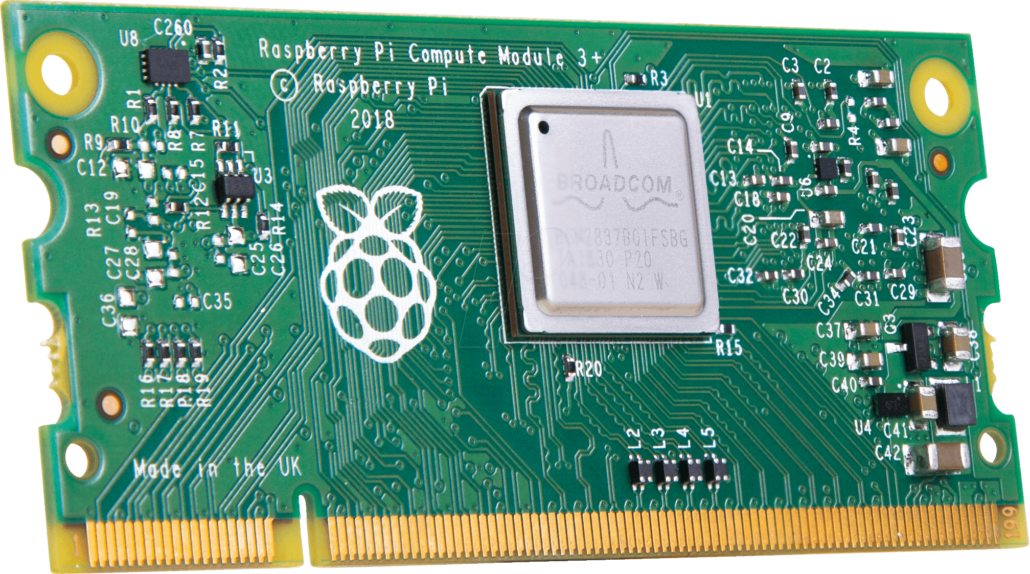
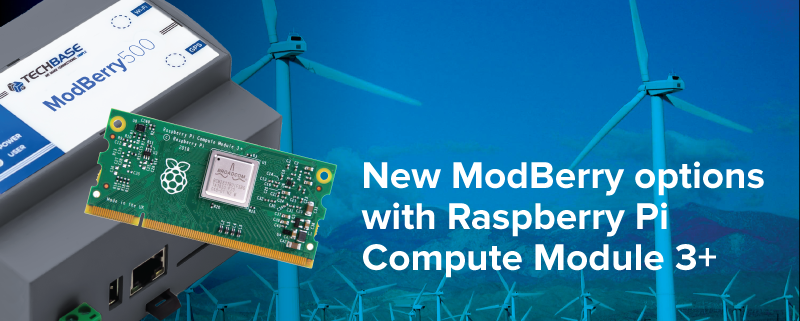
Almost a year ago, in the beginning of 2019, Raspberry Pi Foundation presented Raspberry Pi Compute Module 3+, a successor to previous CM3 version of development board, aimed at businesses and industrial users. The Compute Module uses a standard DDR2 SODIMM (small outline dual in-line memory module) form factor. GPIO and other I/O functions are routed through the 200 pins on the board.

Raspberry Pi Compute Module 3+

Only a few months later, in June 2019, came big premiere of Raspberry Pi 4 Model B, the long-awaited successor of customer RPi3+. With new processor, larger RAM options and many input/output changes, became new standard in small, embedded PC world.

It seems a matter of time before the Raspberry Pi Compute Module 3+ will get its own successor, probably called Compute Module 4, a new milestone of professional embedded IoT module. What might be the specification of this highly expected development board?

Raspberry Pi Compute Module 4 specification forecast

Compute Module 4 specifications probably will look like these:

  • Broadcom BCM2711, Quad core Cortex-A72 @ 1.5GHz will highly plausible replace previous Broadcom BCM2837B0, Cortex-A53 64-bit SoC @ 1.2GHz,
  • 1GB, 2GB or 4GB LPDDR4-3200 SDRAM will become a standard options, instead of fixed 1GB LPDDR2 SDRAM,
  • Current flash memory (eMMC) options: 8GB / 16GB / 32GB from CM3+ will probably stay the same,
  • H.265 (4kp60 decode), H264 (1080p60 decode, 1080p30 encode) might replace outdated H.264 (1080p30)
  • and OpenGL ES 3.0 graphics will replace 1.1, 2.0 versions,
  • weight and factor will stay the same, to provide a possibility to upgrade current IoT applications of CM3 and CM3+

A Lite 4 version of Compute Module is to be expected too, without eMMC and probably limited SDRAM options.

With much higher performance, the new Raspberry Pi Compute Module 4 will, for sure, support Gigabit Ethernet, USB 3.0 expansions. We might even see wider working temperature range, if Raspberry Pi Foundation decides to make some hardware changes, to follow, for example, ESP32 – used in end-point IoT automation.

Industrial use of Compute Module

With Compute Module 3+ options from Raspberry Pi, TECHBASE upgraded their ModBerry 500/9500 industrial computers. From now on the ModBerry 500/9500 can be supported with extended eMMC, up to 32GB. Higher memory volume brings new features available for ModBerry series.

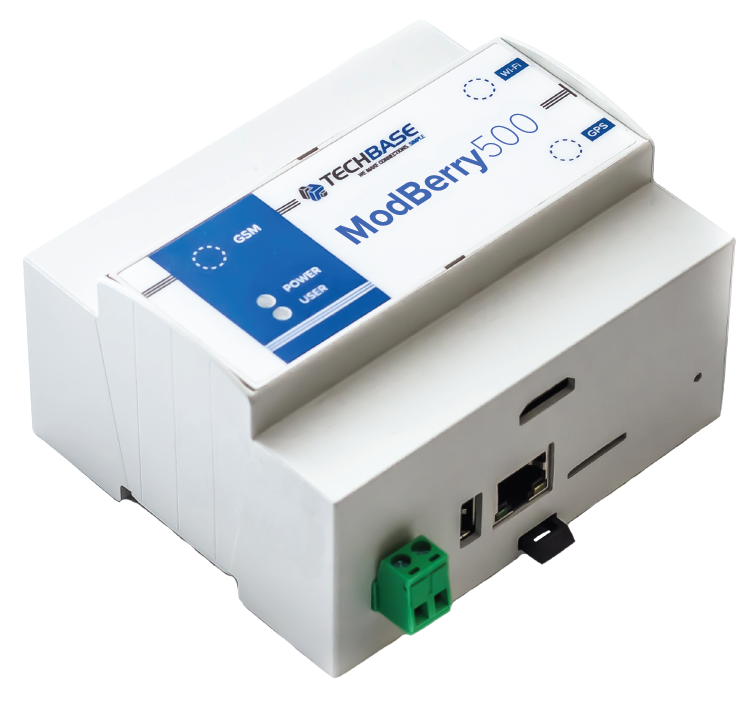
 ModBerry 500 with Compute Module 3+
ModBerry 500 with Compute Module 3+

Higher performance of ModBerry 500/9500 with extended eMMC flash memory, up to 32GB , powered by quad-core Cortex A53 processor allows the device to smoothly run Windows 10 IoT Core system, opening up many possibilities for data management, remote control and visualisation.

New industrial grade touch panel with Raspberry Pi

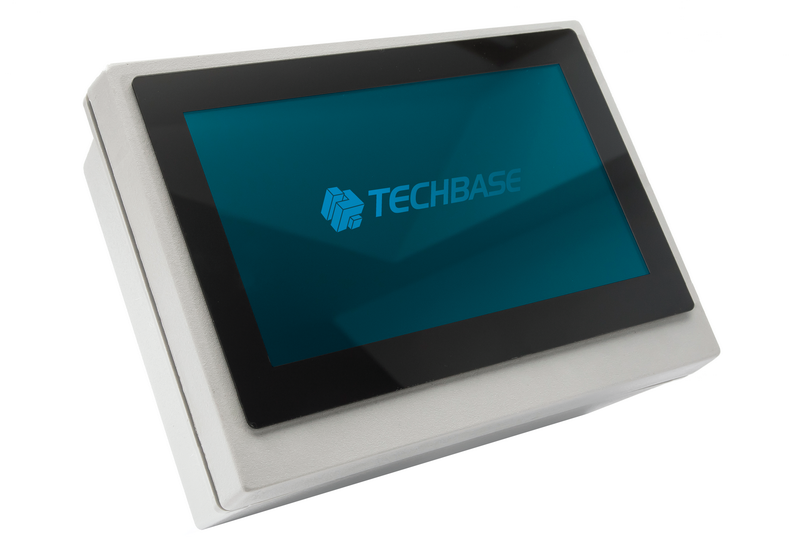
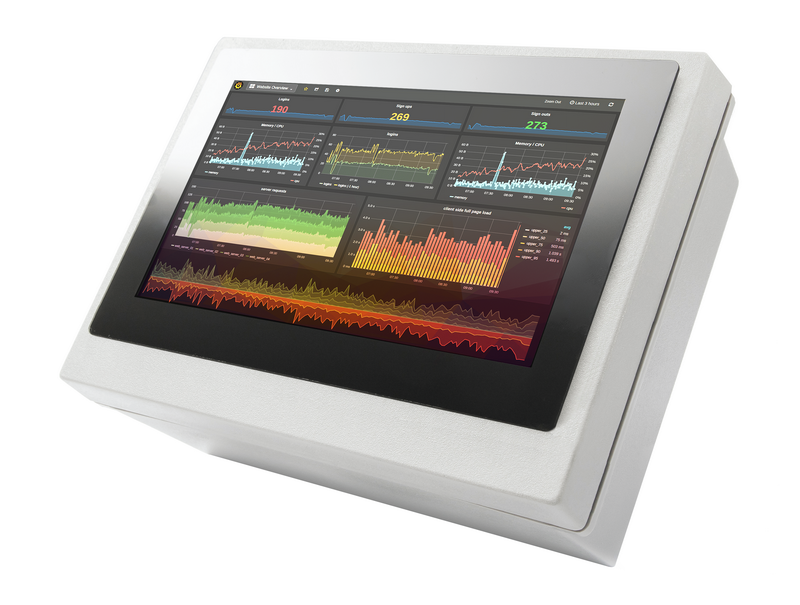
Latest addition to Industrial IoT Ecosystem from TECHBASE is TECHPANEL P500 is an industrial-grade touch panel automation controller for wide range of industrial installations. Equipped with up to date Raspberry Pi Compute Module 3/3+ or Compute Module 3/3+ Lite, 7” capacitive touch display and IP65 hermetic casing with cast gaskets, can be used in harsh conditions of industrial applications.

Raspberry Pi based touch panel features

New TECHPANEL P500 M3/3+ is powered by quad-core Cortex-A53 1.2GHz processor with 1GB RAM and up to 32GB eMMC or 8GB microSD flash memory. Wide range of modems and extra wireline/wireless interfaces via expansion cards makes the TECHPANEL micro-computer a versatile addition to Industrial IoT solutions offered by TECHBASE company.

TECHPANEL devices can easily work remotely with existing ModBerry Gateways & Moduino ESP32 Edge Controllers for data accumulation and monitoring, to perform specific actions before sending the data to cloud services. TECHPANEL with ModuinoModBerry installation can work as standalone Ecosystem (for example via MQTT), providing complex data management solution to any installation.

TECHPANEL P500 M3+ with Compute Module 3+ from Raspberry Pi

Visual management and available Raspbian OS

The device is equipped with compact 800 x 480 px 7-inch TFT panel with 10 points capacitive touch to allow the user to perform direct actions on-site. With IP65 casing and extended working temperature range, TECHPANEL can be placed almost everywhere.

Over 23 million Raspberry Pi’s have been sold and the Raspberry Pi is likely to stay as a new standard in the industry. Official Raspbian OS is free operating system based on Linux Debian optimized for the Raspberry Pi comes with over 35,000 packages, pre-compiled software bundled in a nice format for easy installation.

TECHPANEL P500 M3+ with Compute Module 3+ from Raspberry Pi

SPECIFICATION

  • Cortex A53 1.2GHz Processor
  • RAM 1GB, eMMC up to 32GB
  • 7″ TFT screen (800x600px)
  • Capactitive touch screen (10-point)
  • Wide range of expansion modules (Ethernet, RS-232/485/422,  Digital and Analog I/Os, Relay, M-Bus, CAN, optoisolated I/Os, Accelerometer, etc.)
  • Wide range of wireless modules (GPRS/EDGE, 3G/LTE, NarrowBand-IoT, GPS, Wi-Fi, Bluetooth, LoRa, ZigBee, Z-Wave, Sigfox, Wireless M-Bus, etc.)
  • Water-Resistant casing (IP65)
  • Operating temperature: -20°C ~ 70°C
  • Optional SD card support instead of eMMC Flash
Raspberry Pi based controller with Modbus, M-Bus & MQTT support

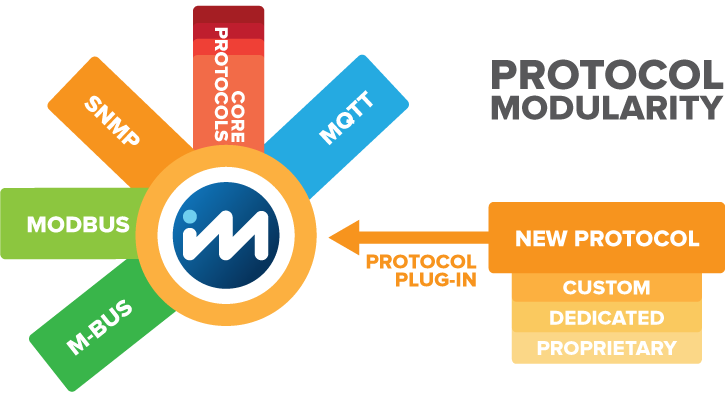
Raspberry Pi Compute Module 3+ based ModBerry industrial computer series use latest Compute Module 3+, powered by Quad-core Cortex-A53 1.2GHz processor, 1024MB LPDDR2 RAM and up to 32GB Flash eMMC. The module increase the device’s performance up to ten times, maintaining low power consumption and optimal price of the solution. Raspberry Pi based ModBerry features industrial protocol support, e.g. Modbus, M-Bus, SNMP, MQTT and the possibility to add new protocols with ease.

ModBerry protocol modularity

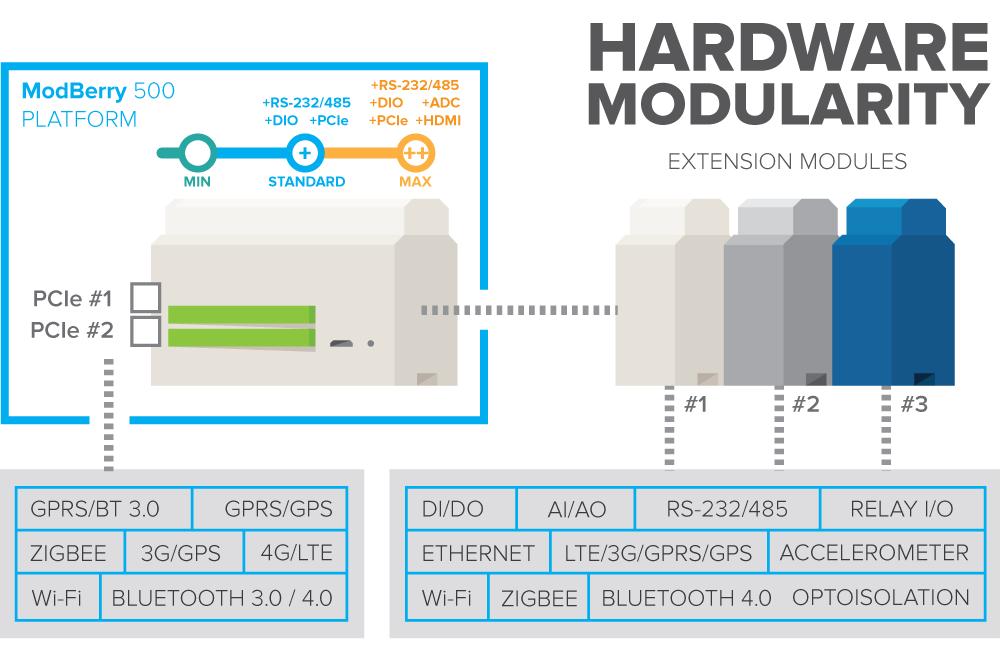
ModBerry 500 hardware modularity

The main features of ModBerry Industrial Computers series are the extension capabilities to increase input/output number, add up to 4 internal wireless communication modems and modules, support additional features such as accelerometer or opto-isolation options.

ModBerry 500 series offers wide range of industrial interfaces e.g.: digital inputs/outputs, analog inputs/outputs, relay outputs, serial RS-232/485 ports, Ethernet, 1-Wire, CAN, USB 2.0, HDMI, LTE/3G/GPRS, NarrowBand IoT/LTE, GPS, ZigBee, WiFi, Bluetooth, LoRa and many more via extension modules.

ModBerry hardware modularity

Raspberry Pi based industrial computer ModBerry expands to new platforms, setting new trends on the industrial automation market. ModBerry series offers now a variety of new processing units, wider range of possible applications due to much higher performance than before. We introduced ModBerry M700 based on NanoPi platform, Intel-based ModBerry M1000 with UpBoard computing module and latest ModBerry 400 to complete Raspberry Pi platform with economical device for further upgrades with extension modules.

ModBerry remote management

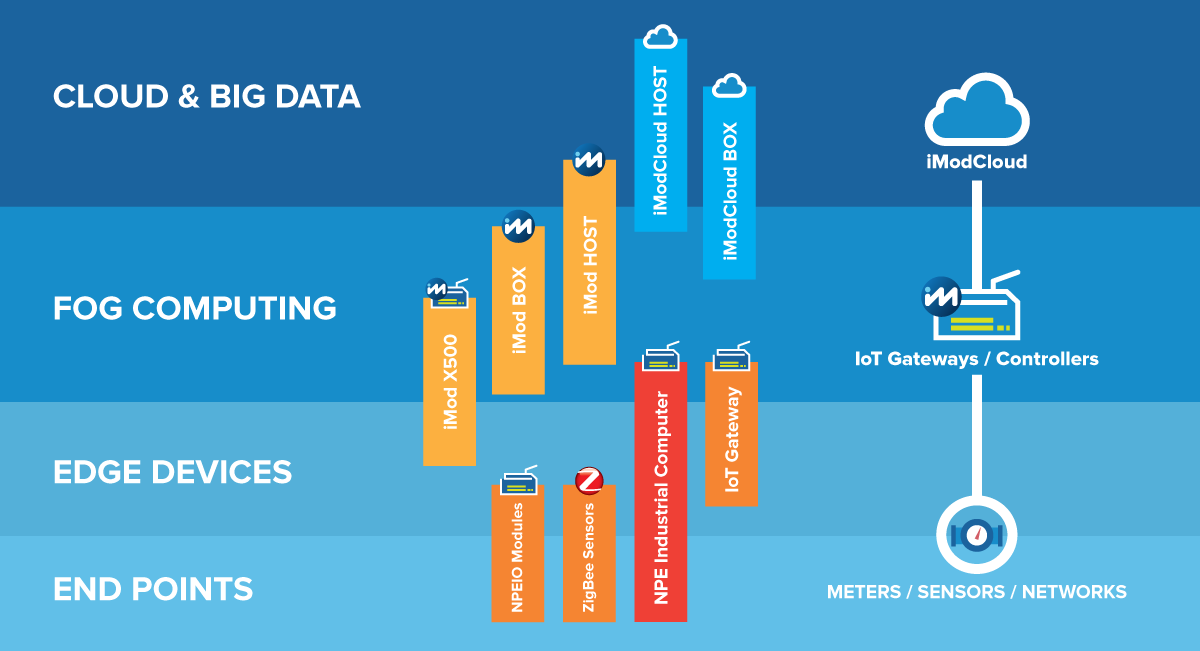
The iMod platform guarantees a quick start and full use of the ModBerry computer, without the need to write complicated software. One of the main advantages of the iMod platform is its ease of use and variety of available functionalities. Due to the available SDK, the platform can be extended with new, dedicated functionalities.

iMod can be installed directly onto ModBerry device or using external PC outside the installation (iModBOX). The third option is using dedicated hosting server to host the iMod software (iModHOST).

iModCloud Ecosystem

Another product is iModCloud software-service, which enables full control of ModBerry/iMod devices. Together they form a stand-alone solution – iModCloud Ecosystem, a combination of cloud services with web-based user interface and industrial devices, fully manageable remotely.

iModCloud can be hosted externally, using stable DELL servers to host the cloud service.(iModCloudHOST). For higher data security or depending on project features, iModCloud can be hosted internally, inside the installation (iModCloudBOX) hosted by the dedicated Mini-PC or from portable memory stick (iModCloudSTARTER).

More information Raspberry Pi based industrial device

TECHBASE provides solutions for industrial automation, telemetry, remote access and integration with IT systems. Since 2012 the company has been actively developing its competences in the market. Due to an innovative approach – based on the use of cutting-edge technologies, open standards and easy to maintain products – the company has earned the trust of Customers all over the world.

TECHBASE’s mission is to provide our Customers with tools, which will shorten and simplify the process of system implementation. With open architecture and high level of configurability, maintenance of a system is not expensive anymore.

To read more about ModBerry 500 M3 solution, download PDF datasheet: http://a2s.pl/products/ModBerry/ModBerry_500M3_EN.pdf
Read more about all ModBerry Industrial Solutions at: https://modberry.techbase.eu/

How Raspberry Pi Compute Module 4 might help IoT & Industrial Automation?

UPDATE 22.10.20: ModBerry 500 with Compute Module 4 available for pre-order

TECHBASE’s ModBerry industrial computer series has received an update to Compute Module 4 and is available for pre-orders. TECHBASE is leading manufacturer of Industrial Raspberry Pi and Industrial Compute Module solutions. ModBerry 500 series is fully compatible with all releases of Compute Module from Rasbperry Pi foundation.

Main features of updated device are:

  • up to 4x faster eMMC Flash with up to 32GB storage
  • up to 2x faster performance of CPU apllications than previous CM3 version
  • up to 8x more RAM (8GB LPDDR4)
  • optional 1Gbit Ethernet interface
  • optional PCIe card support for NVMe SSD drive (via M.2)
  • optional second PCIe support for wireless modem solutions

First orders will be ready with subject to the availability of the CM4 module itself.

Update on Raspberry Pi’s Compute Module 4 features [15.10.2020]

According to latest leaks about Compute Module 4 specifiaction and features we can be more than sure that:

  • New Compute Module will feature Wi-Fi and Bluetooth on-board! Raspberry Pi Compute Module series will probably include versions with and without these modems to provide modules for variety of industrial applications.
  • PCI-Express line will be available externally to enable extension support via PCIe
  • Ethernet support will be enabled, most probably 1Gbps, since it is a standard in latest Raspberry Pi 4B.
  • 5x UART will be available to Compute Module 4 users

Compute Module & Industrial IoT symbiosis

It a matter of time before we will see Raspberry Pi Compute Module 3+ successor, probably called Compute Module 4, a new milestone of professional embedded IoT module. What might be the specification of this highly expected development board? What changes will it bring to Industrial use of IoT?

We are witnessing the fourth industrial revolution. Its key element is to create systems of interconnected sensors and actuators that operate within one global network. The so-called Internet of Things, unlike the consumer market, meet much more difficult requirements. To be able to meet harsh industrial expectations, many automation companies have already begun to offer solutions especially tailored to the application of the Internet of Things in Industry 4.0.

Although it may seem quite obvious nowadays, it is worth to be aware that just a few years ago such algorithms were practically not implemented at all in small consumer devices. It was only when people got used to smartphones that the idea of ubiquitous communication and adaptation of the way the system or device works to the environment became understandable. In fact, this confirms the validity of the idea of the Internet of Things as an important direction in the development of electronics – and in practice also automation.

Raspberry Pi is gaining recognition in Industry

Almost a year ago, in the beginning of 2019, Raspberry Pi Foundation presented Raspberry Pi Compute Module 3+, a successor to previous CM3 version of development board, aimed at businesses and industrial users. The Compute Module uses a standard DDR2 SODIMM (small outline dual in-line memory module) form factor. GPIO and other I/O functions are routed through the 200 pins on the board.

Raspberry Pi Compute Module 3+

Only a few months later, in June 2019, came big premiere of Raspberry Pi 4 Model B, the long-awaited successor of customer RPi3+. With new processor, larger RAM options and many input/output changes, became new standard in small, embedded PC world.

It seems a matter of time before the Raspberry Pi Compute Module 3+ will get its own successor, probably called Compute Module 4, a new milestone of professional embedded IoT module. What might be the specification of this highly expected development board?

Raspberry Pi Compute Module 4 specification forecast

Compute Module 4 specifications probably will look like these:

  • Broadcom BCM2711, Quad core Cortex-A72 @ 1.5GHz will highly plausible replace previous Broadcom BCM2837B0, Cortex-A53 64-bit SoC @ 1.2GHz,
  • 1GB, 2GB or 4GB LPDDR4-3200 SDRAM will become a standard options, instead of fixed 1GB LPDDR2 SDRAM,
  • Current flash memory (eMMC) options: 8GB / 16GB / 32GB from CM3+ will probably stay the same,
  • H.265 (4kp60 decode), H264 (1080p60 decode, 1080p30 encode) might replace outdated H.264 (1080p30)
  • and OpenGL ES 3.0 graphics will replace 1.1, 2.0 versions,
  • weight and factor will stay the same, to provide a possibility to upgrade current IoT applications of CM3 and CM3+

A Lite 4 version of Compute Module is to be expected too, without eMMC and probably limited SDRAM options.

With much higher performance, the new Raspberry Pi Compute Module 4 will, for sure, support Gigabit Ethernet, USB 3.0 expansions. We might even see wider working temperature range, if Raspberry Pi Foundation decides to make some hardware changes, to follow, for example, ESP32 – used in end-point IoT automation.

Industrial use of Compute Module

With Compute Module 3+ options from Raspberry Pi, TECHBASE upgraded their ModBerry 500/9500 industrial computers. From now on the ModBerry 500/9500 can be supported with extended eMMC, up to 32GB. Higher memory volume brings new features available for ModBerry series.

 ModBerry 500 with Compute Module 3+
ModBerry 500 with Compute Module 3+

Higher performance of ModBerry 500/9500 with extended eMMC flash memory, up to 32GB , powered by quad-core Cortex A53 processor allows the device to smoothly run Windows 10 IoT Core system, opening up many possibilities for data management, remote control and visualisation.

Raspberry Pi Compute Module 3+

With new Compute Module 3+ options from Raspberry Pi, we upgraded our ModBerry 500/9500 industrial computers. From now on the ModBerry 500/9500 can be supported with extended eMMC, up to 32GB. Higher memory volume brings new features available for ModBerry series.

Raspberry Pi Compute Module 3+

New Rasperry Pi’s Compute Module 3+ specs:
Processor: Broadcom BCM2837 64-bit
Core: Quad-Core ARM Cortex A53
Clock: 1.2 GHz
RAM memory: 1 GB LPDDR2
eMMC Flash memory: 8/16/32 GB (CM3 has 4GB RAM only)

RASPBERRY PI COMPATIBLE

Over 10 million Raspberry Pi’s have been sold and the Raspberry Pi is likely to stay as a new standard in the industry. Official Raspbian OS is free operating system based on Linux Debian optimized for the Raspberry Pi comes with over 35,000 packages, pre-compiled software bundled in a nice format for easy installation.

WINDOWS 10 IOT SUPPORT

Higher performance of ModBerry 500/9500 with extended eMMC flash memory, up to 32GB , powered by quad-core Cortex A53 processor allows the device to smoothly run Windows 10 IoT Core system, opening up many possibilities for data management, remote control and visualisation.

ModBerry 500/9500 devices are still available with previous Compute Module 3 (4GB RAM) and new CM3+ with 8/16/32GB RAM are available on demand. For delivery time, ask our Sales Department via Live Chat, since the small quantities of new modules are available seasonally.

The latest version of Raspberry Pi development board, Raspberry Pi Model 3 B+, is now available as a platform for ModBerry M500 industrial computer series. Raspberry Pi 3 Model B+ (Plus) offers has more computing power and much greater possibilities in the field of wired and wireless communication.

The biggest new feature introduced in 2016 is the Raspberry Pi 3 wireless support. Now the creators took a step forward and refined the solution. The new Raspberry Pi 3 Model B+ – supports two-band Wi-Fi (2.4 GHz and new 5 GHz), Bluetooth version 4.2  and Ethernet over USB 2.0 (up to 300 Mb / s). Upgraded ModBerry M500 series is powered by s more powerful heart, in the form of a Broadcom BCM2837B0 quad-core processor clocked at 1.4 GHz. Power-over-Ethernet support has also appeared, and heat dissipation has been improved.

ModBerry M500 on Raspberry Pi 3 Model B+

ModBerry M500 vs ModBerry 500(CM3)

Standard ModBerry 500 series is based on Raspberry Pi Compute Module 3, an industrial version of commercial Raspberry Pi branch, with flagship Raspberry Pi 3 Model B+. Used Compute Module is more suitable for custom products, such as our ModBerry 500 industrial computer, which can be adapted to customer’s need with wide range of extension modules from TECHBASE. ModBerry equipped with CM3 can be configured to support chosen number of RS-232/485 serial ports, Digital and Analog I/Os, various setup of Ethernet/USB ports, CAN interface, 1-Wire and wireless modems: 3G/LTE, GPRS/EDGE, GPS, LoRa, ZigBee, Wireless M-Bus, NarrowBand-IoT and many more.

The updated M500 availability

Currently the updated M500 samples, are available on demand. Please contact TECHBASE’s sales department via https://iot-industrial-devices.com/ contact form with specific requirements to receive an offer that will suit the project’s needs. Since the M300 update is still under the development, the development, specific datasheets will be available in mid-June. The pricing of each unit may vary on the basis of configuration and order quota.

Introduced in November 2017, the ModBerry M300 series, based on NanoPi NEO revolutionised the economic segment of Industrial IoT devices and proved, that automation and monitoring can be done effectively with low expenditure on industrial installations.

Read more: http://linuxgizmos.com/automation-controller-runs-linux-on-a-nanopi-neo-sbc/

https://www.cnx-software.com/2017/11/15/techbase-modberry%E2%80%8B-m300-linux-iot-gateway-%E2%80%8Bis-powered-by-nanopi-neo-board/

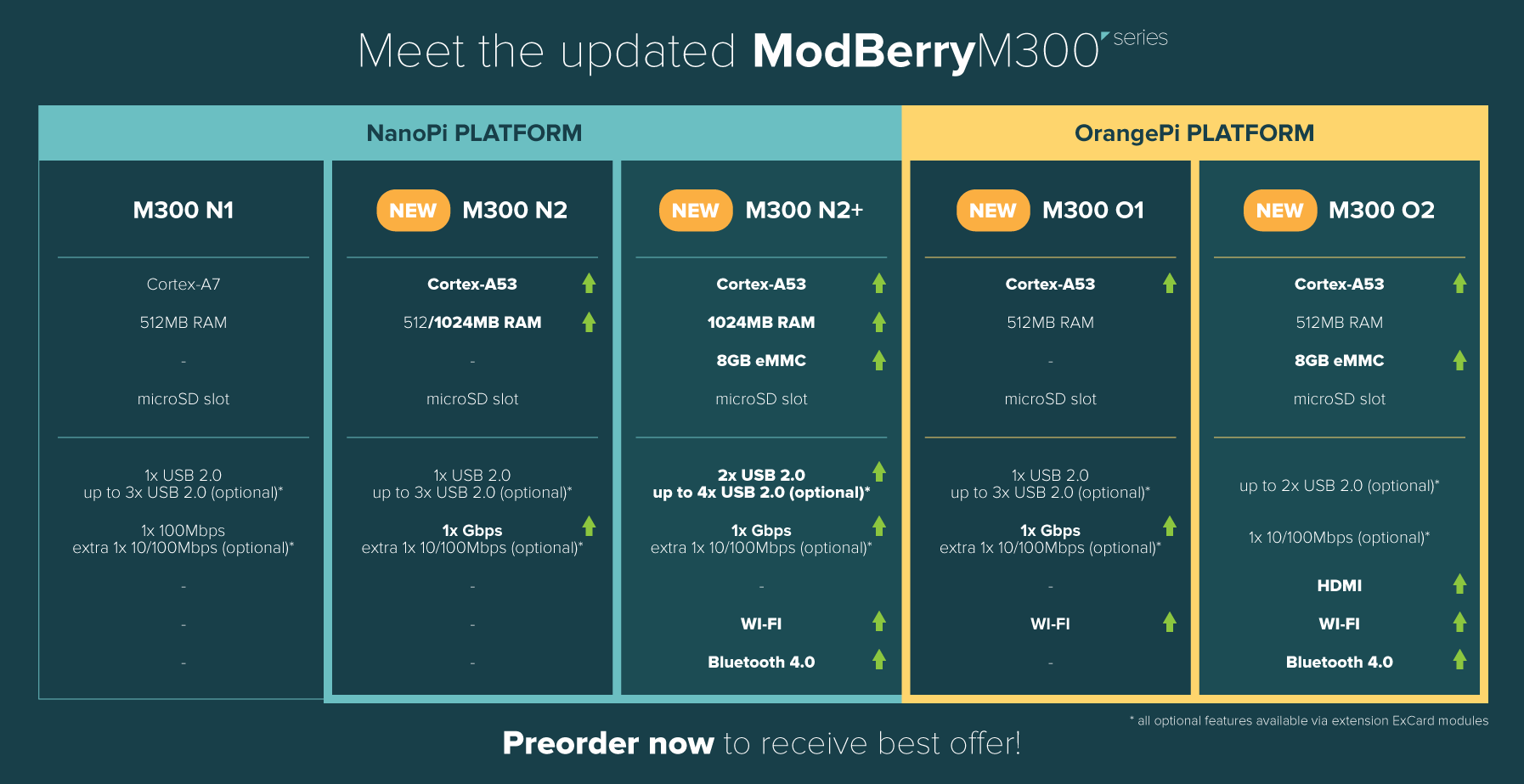
To ensure constant development of TECHBASE’s solutions and cutting-edge technology, the NanoPi platform part of ModBerry series is expanded by updated ModBerry M300 N2 product, based on NanoPi NEO2. The new addition features Quad-core Cortex-A53, twice more RAM than previous version of NanoPi NEO and Gigabit Ethernet for fast communication.

For even wider range of communication interfaces and application possibilities, TECHBASE offers now ModBerry M300 N2+ based on the NanoPi NEO Plus2. M300 N2+ is equipped with 8GB eMMC, features more USB ports, Gigabit Ethernet port like M300 N2 and is supported with onboard Wi-Fi/Blutetooth 4.0 to ensure many channels of data management.

ModBerry M300 series can optionally support an external 2.5″ SATA hard disk and 2242 SSD storage units with M.2 interface thanks to onboard JMS567 USB to SATA controller. With extra storage space, data management of specific installations would be more convenient than sending all unprocessed data into cloud or directly to user.

OrangePi capabilities

To meet the Industrial IoT market demands the ModBerry family joined new embedded computer platform, offering adjustable solutions for every industrial installation. ModBerry M300 O1/O2 series is formed by two OrangePi module boards offering different approach to IoT than NanoPi solutions.

ModBerry M300 O1 based on OrangePi Zero Plus features Allwinner H5 (Quad-core Cortex-A53) SoC, moderate 512MB RAM, storage memory option with microSD slot, USB and Gigabit Ethernet port. The wireless communication is supported with onboard Wi-Fi module.

Offering much higher performance and wider feature range, the ModBerry M300 O2 features same SoC as M300 series, but thanks to OrangePi Zero Plus2 means, the device is equipped with onboard 8GB eMMC, extra microSD expansion slot as alternative and wired/wireless interfaces, e.g. HDMI, Wi-Fi, Bluetooth 4.0.

ExCard modules to peak the performance

Every TECHBASE’s industrial computer is supported by ExCard add-on modules for extra RS-232/485 serial ports, Ethernet ports, PCIe slots, analog input and output, digital I/Os, relays, M-Bus interface, opto-isolation, accelerometer, etc. To provide specific communication paths, ModBerry can be rigged with additional Wi-Fi/Bluetooth module, 3G/LTE, NarrowBand-IoT, LoRa, ZigBee, GPS and Wireless M-Bus.

The latest options for ModBerry series are:

  • SuperCap expansion, to provide constant power supply as a UPS option
  • OLED 0.96” & new OLED 1,3″ screen, allowing the control without the need of connecting into the device
  • ESP32 module as a security chip, to add a firewall into control installation and ensure constant operation of the device, even with power drops and random events
  • Aluminum case, to grant much higher durability for extra harsh industrial conditions
  • Mentioned earlier SATA/M.2 SSD controller for extra data storage

The updated M300 availability

Currently all the updated M300 samples, including M300 N2, N2+, O1, O2 are available on demand. Please contact TECHBASE’s sales department via https://iot-industrial-devices.com/ contact form with specific requirements to receive an offer that will suit the project’s needs. Since the M300 update is still under the development, specific datasheets will be available in mid-February. The pricing of each unit may vary on the basis of configuration and order quota.

The latest configuration of ModBerry 500 device presents the important milestone in TECHBASE’s offer. The introduction of two platform symbiosis, RaspberryPi Compute Module 3 assisted with Espressif’s ESP32 module brings new possibilities of application to life. High performance of CM3, if compromised by exposition to harsh environmental conditions or sudden drop of power, is aided with low-powered ESP32’s real-time system to continue operation of the device. ESP32 module can be battery powered, same as standalone Moduino series, based on similar solution.

ESP32 subsystem for ModBerry 500

Main difference between ESP32-aided ModBerry device and ESP32-based Moduino is that the first one benefits from low-power module aid to prevent errors and downtimes. ESP32 compared to Compute Module 3 works much longer on battery power supply and offers extended sleep modes. Real-time system of ESP32 and simplified communication between ESP32-aided ModBerry device and Moduino controllers drastically shortens the time needed for the system implementation and the cost of maintaining the application. It also enables the use of Espressif’s Wi-Fi-based technology in the ESP-NOW and ESP-MESH networks.

The separate ModBerry-Moduino Ecosystem, working as a separate devices is a solution for scattered object and installations monitoring – with the use of wireless communication interfaces (e.g. LoRa, NarrowBand-IoT, ZigBee, Wi-Fi, Bluetooth, etc.), rather than standard wired networks. For more information ask TECHBASE via one of contact form at: https://iot-industrial-devices.com/ & http://moduino.techbase.eu/

Coming soon

TECHBASE plans further development of the product, particularly the issue of remote access to input/output resources and use of ESP32 as a Security Chip – hardware layer protection against hacking (very important issue in current IoT business).