Wpisy

The NB-IoT is becoming a standard in wireless communication of IoT devices, for standalone solutions and complex installations with thousands of units, coordinated with gateways. Will NarrowBand-IoT replace other wireless technologies in industrial automation?

What exactly is NarrowBand?

NarrowBand-IoT (NB-IoT) is a radio technology in the field of LPWAN (Low Power Wide Area Network) dedicated for IoT devices, operating on the licensed frequency band used by telecommunications operators.

The biggest advantages of NB-IoT include:

  • long battery life (up to 10 years),
  • efficiency in the amount of data transferred,
  • intra-building penetration,
  • the ability to connect even tens of thousands of devices in one system,
  • a global standard,
  • a high level of security and low cost

You can build mass solutions and those that until now were considered unprofitable. NB-IoT technology works in the licensed band, so there is no risk of interference and blocking communication by competing networks.

The service life of devices powered by two AA batteries is up to 10 years. However, the devices themselves are constructed in such a way that they can work for many years without the need for technical supervision and recharging the battery.

NB-IoT used in industrial solutions

One of many uses of NarrowBand-IoT wireless modems can be communication of edge devices, dedicated to data management, process control (e.g. with MQTT protocol) and monitoring. Latest ESP32-based eModGATE controller from TECHBASE company is a series utilizing MicroPython environment to provide data management solutions for end-points applications. The eModGATE has built-in Wi-Fi/BT modem and can be equipped with additional NarrowBand-IoT modems

eModGATE eqipped with wireless NB-IoT modem are perfect for industrial automation solutions, e.g. data logging, metering, telemetrics, remote monitoring, security and data management through all Industrial IoT applications.

Supported bandwidths:

  • Global-Band LTE CAT-M1:  B1/B2/B3/B4/B5/B8/B12/B13/B18/B19/B20/B26/B28/B39;
  • Global-Band LTE CAT NB-IoT1:  B1/B2/B3/B5/B8/B12/B13/B17/B18/B19/B20/B26/B28;
  • GPRS/EDGE 850/900/1800/1900Mhz Control Via AT Commands

Supported data transfer:

  • LTE CAT-M1(eMTC) – Uplink up to 375kbps, Downlink up to 300kbps
  • NB-IoT – Uplink up to 66kbps, Downlink up to 34kbps
  • EDGE Class – Uplink up to 236.8Kbps, Downlink up to 236.8Kbps
  • GPRS – Uplink up to 85.6Kbps, Downlink up to 85.6Kbps

Every fan of new technologies has heard of small single-board computers (SBC) in the form of Raspberry Pi 4. Raspberry debuted on the market in many different versions, and the current model is Model 4B. A lot of people got infected with it for DIY, programming or Linux. But new board comes with variety of pros and cons, as compared to previous RPi3 versions.

Industrial use of market Raspberry Pi 4 SBCs

A year ago, TECHBASE released an updated version of the ModBerry M500 industrial IoT computer, replacing the aging Raspberry Pi 3 with a 3B+, giving it better performance. With the recent launch of the Raspberry Pi 4, TECHBASE has yet again, announced another upgrade to the M500, which now packs the latest single-board computer.

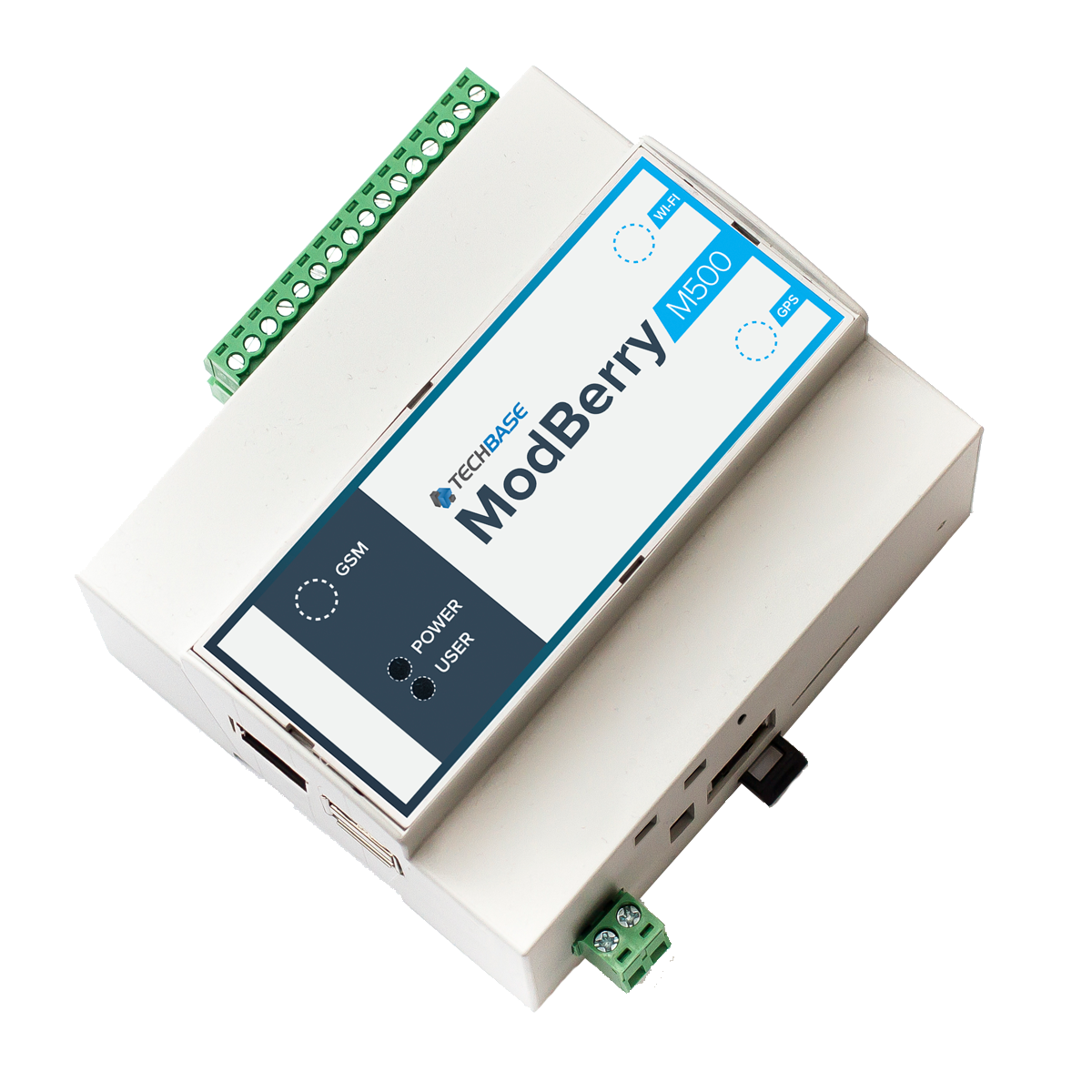
ModBerry M500 with Raspberry Pi’s 4

ModBerry M500 also utilizes many more SBC platforms, such as Orange Pi, NanoPi and Intel-based UpBoard. Find more information here: https://iiot-shop.com/product/modberry-m-series/

When the news came out that ventilator shortages could be a problem, many saw the need for alternatives to the big manufacturers and rushed to create them. Unlike industrial projects, these projects were open and shared. Currently, Robert Reed and his group are starting to systematically evaluate the ranking of over 80 such open source projects.

Their work is a milestone in public research and development efforts to solve problems. For many ventilator builders, the group recognized the need for independent evaluation and testing of various projects. This control provides important feedback to both designers and future builders. This is a service you can expect from government regulators if they can act very quickly.

Reid and colleagues Geoff Mulligan, Lauria Clarke, Juan E. Villacres Perez and Avinash Baskaran to help to learn about these studies. This includes submission of modular team designs that allow distributed production and unique suggestions for testing and monitoring these systems. This is called VentMon.

Industrial Arduino-like devices as a base of medical equipment?

When industrial IoT devices and edge devices, like medical equipment work together, digital information becomes more powerful. Especially in contexts where you need to collect data in a traditional edge context, or control the servo-motors of a ventilatr. You can then remotely monitor the container using the sensor.

By introducing AI (artificial intelligence) into the device itself, edge computing can also make more context-sensitive, quick decisions at the edge. Data gathered from the sensors can be transferred to the cloud at any time after local work has been completed, contributing to a more global AI process, or archived. With the combination of industrial IoT devices and advanced technology, high quality analysis and small footprint will become the AI standard in 2020.

Industrial IoT use of ESP32 chip in eModGATE

Latest innovations used in industrial solutions

One of many uses of IoT can be edge devices, dedicated to data management, process control (e.g. with MQTT protocol) and monitoring. Latest ESP32-based eModGATE controller from TECHBASE company is a series utilizing MicroPython environment to provide data management solutions for end-points applications. The eModGATE has built-in Wi-Fi/BT modem and can be equipped with additional NarrowBand-IoT, LoRa, ZigBee, etc.

For example eModGATE eqipped with wireless NB-IoT modem are perfect for industrial automation solutions, e.g. data logging, metering, telemetrics, remote monitoring, security and data management through all Industrial IoT applications.

In the toughest annual race of this kind, Tor des Géants participants run over 300 kilometers and overcome altitude changes at 24 kilometers in less than 150 hours. The Everynet solution based on LoRa monitored runner locations during the event for the fourth year in a row to ensure the safety and health of participants. Each runner is equipped with a LoRa based sensor that sends geolocation data in real time to the Everynet gateway, which is implemented during the race.

The race organizer chose the LoRa Everynet app because the race location in the Italian mountain range is obviously not covered by the mobile network. In addition, the long range capability and low power consumption of the LoRa device ensure consistent and reliable runner position data during the week of the race. Most devices consume less than 30% of the total battery capacity as a result of an incident. After the introduction of the Every des application on Tor des Géants, race employees could often intervene directly to ensure the safety of the runner.

With LoRaWAN-based connectivity, Everynet was able to simply and efficiently provide coverage to the entirety of Tor des Géants, including difficult terrain, without requiring additional network infrastructure,” said Antonio Terlizzi, Sr. Vice President of Global Sales for Everynet. “Combining the strong network coverage of LoRaWAN with reliable tracking sensors provides race organizers with the accurate, consistent and real-time data necessary to keep runners safe and help ensure a successful event

LoRa Coverage
LoRa coverage. Source: https://lora-alliance.org/

Use of LoRa in industrial automation

Use of wireless connection makes life and work easier for us every day – from radio stations and GSM to Wi-Fi wireless networks, Zigbee, short-range Bluetooth connectivity and LoRa. With the spread of internet access, the possibility of using wireless connectivity for a new type of service and application has opened. Terminology such as M2M (Machine to Machine) – remote communication between devices and IoT – a network of applications and devices communicating with the Internet have been created.

ModBerry M500 with Raspberry Pi’s 4 on-board

Device equipped with LoRa module is delivered with a LoRaWAN protocol stack, so it can be easily connected to the existing, fast-growing LoRa Alliance infrastructure – both in privately managed local area networks (LAN) and public telecommunications networks to create wide area low power WAN (LPWAN) on a national scale. LoRaWAN stack integration also allows connection to any microcontroller, such as ModBerry industrial device from TECHBASE.

Nowadays, mobile Internet offers are becoming more and more popular. They are often cost-effective for those who do not download too much from the web. Usually you don’t even need to sign a contract – some operators offer fairly favorable pre-paid internet offers. Anyway, even if we want an Internet contract, sometimes the monthly fee is lower if we do not take the device.

In that case, how will we receive this Internet? The solution is simple – unfortunately we have to invest some money in the LTE modem. As a router separating the signal we will use Raspberry Pi. For a ready and complete solution we can choose ModBerry Industrial IoT devices already equipped with modem of our choosing

ModBerry M500 modem configurability

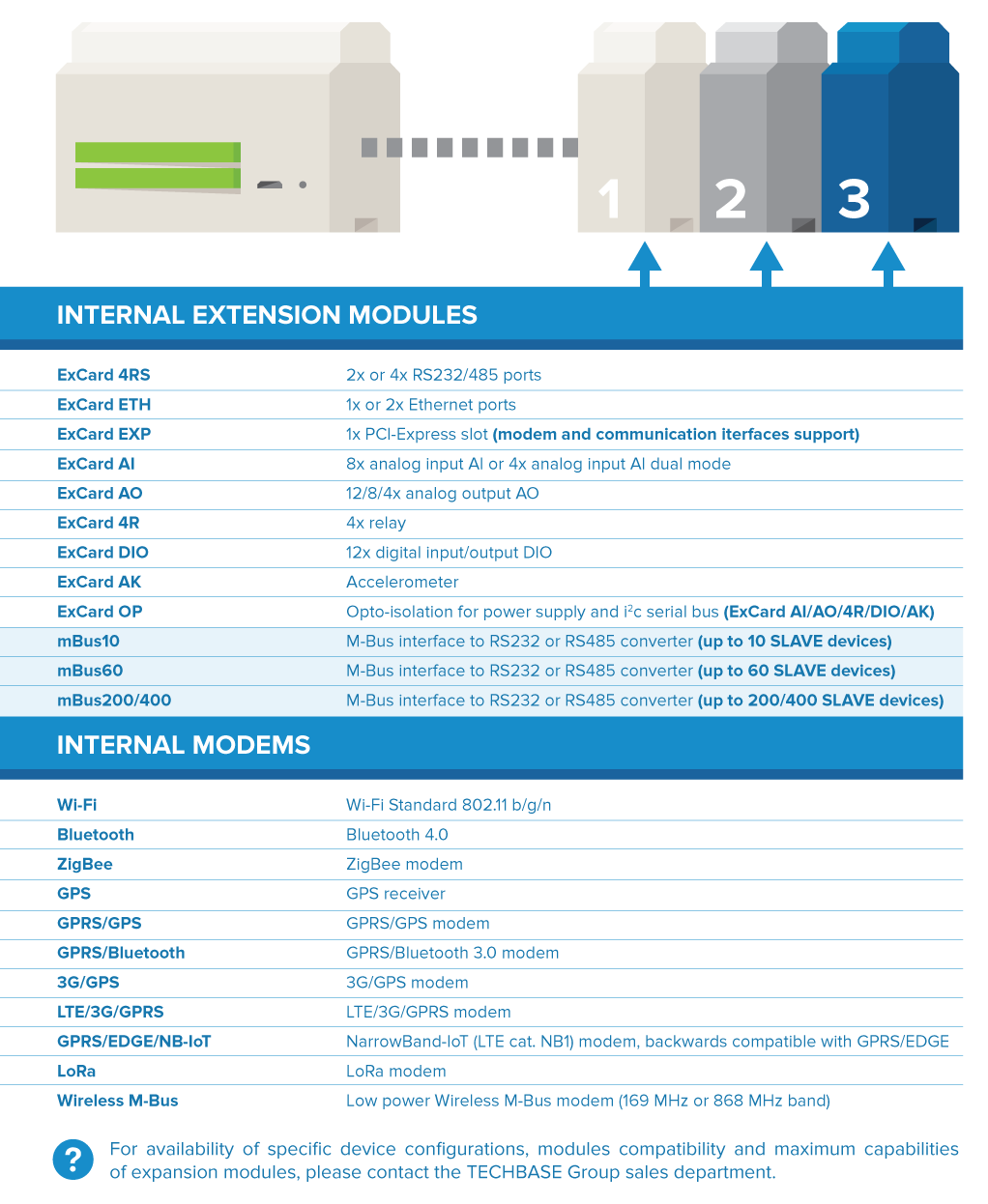
ModBerry M500 added wide range of I/Os to the board, including RS232/485 serial ports, digital and analog I/Os, 10/100Mbps Ethernet port, USB, 1-Wire and optional CAN. ModBerry series also offers additional wired interfaces and wireless communication modules with their proprietary modules called ExCard. The range of wireless modules include 3G/LTE, NarrowBand-IoT (NB-IoT), Wireless M-Bus, ZigBee, LoRa, Sigfox, Wi-Fi, Bluetooth and many more.

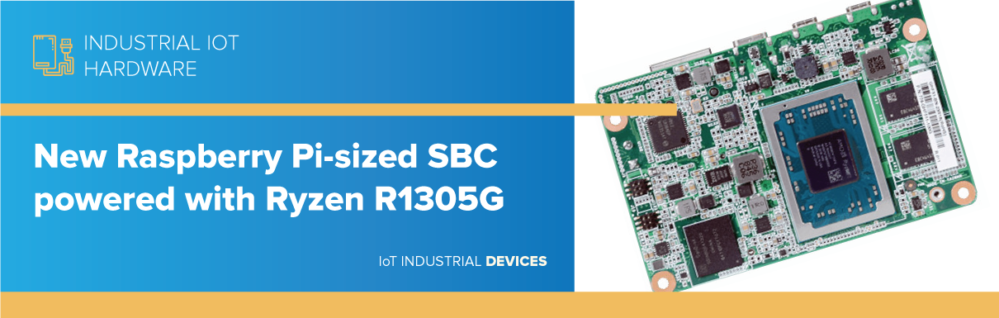
New Raspberry Pi-sized SBC powered with Ryzen R1305G

Single board computers, or SBCs for English in short, are very popular among enthusiasts and DIY enthusiasts. Although they have been available on the market for a long time, the British Raspberry Pi with its low price and great support contributed to the interest of this market by other manufacturers. Today we will focus on the legendary DFI company, which decided to present its vision of this type of device. It is unique because on the laminate the size of a credit card we find the AMD Ryzen Embedded 1000 chip, DDR4 memory chips, built-in eMMC memory and Mini PCI connector. And all this capable of working under classic Windows or Linux.

DFI GHF51 board (top)

DFI GHF51 is a single-board computer with dimensions of 84 x 55 millimeters. The green laminate features a 2-core and 4-thread AMD Ryzen Embedded R1305G chip working with a 1.5 GHz base clock and a maximum clock speed of 2.8 GHz at a TDP from 8 to 10 W. It has an integrated AMD Radeon Vega graphics chip equipped with 3 CU units that supports H.265 video content, VP9 and 4K resolution. The RAM memory is a single-channel DDR4 with a capacity of 2 to 8 GB and working with a clock up to 3200 MHz. The internal memory is an eMMC system with a capacity of 16 to 64 GB, and the whole is completed by the Mini PCIe connector.

DFI GHF51 board (back)

Industrial use of various development boards

Introduced in November 2017, the ModBerry M300 series, based on NanoPi NEO revolutionised the economic segment of Industrial IoT devices and proved, that automation and monitoring can be done effectively with low expenditure on industrial installations.

ModBerry M300 O1 based on OrangePi Zero Plus features Allwinner H5 (Quad-core Cortex-A53) SoC, moderate 512MB RAM, storage memory option with microSD slot, USB and Gigabit Ethernet port. The wireless communication is supported with onboard Wi-Fi module.

Offering much higher performance and wider feature range, the ModBerry M300 O2 features same SoC as M300 series, but thanks to OrangePi Zero Plus2 means, the device is equipped with onboard 8GB eMMC, extra microSD expansion slot as alternative and wired/wireless interfaces, e.g. HDMI, Wi-Fi, Bluetooth 4.0.

A new alternative for the Raspberry Pi was presented. The Raspberry Pi Zero Micro SBC called Kimχ Micro has a quad-core processor and an mPCIe slot for adding PCIe cards.

Kimχ Micro includes the NXP i.MX 8M Mini processor with up to 4 ARM Cortex-A53 cores. These cores can be clocked up to 1.8 GHz and are complemented by the ARM Cortex-M4F real-time core and the Vivante GC NanoUltra 3D graphics processor. The latter allows Kimχ Micro to encode and decode 1080p content at 60 FPS.

In addition, Kimχ Micro SBC contains 1 GB of LPDDR4 RAM, 8 GB of eMMC flash memory and a Micro SD card reader. There is also a serial EEPROM. Kimχ Micro also has a built-in mPCIe connection for adding PCIe cards, such as Wi-Fi cards. By the way, the board must support LTE or LoRA cards.

Kimχ Micro (preliminary) specifications:

  • SoC – NXP i.MX 8M Mini single to quad-core Cortex-A53 processor @ up to 1.8 GHz, Cortex-M4F real-time core @ up to 400 MHz, Vivante GC NanoUltra 3D GPU + GC320 2D GPU, VPU for 1080p60 video decoding and encoding; (Single and dual-core version of NXP i.MX 8M Mini processor are also compatible)
  • System Memory – 2GB LPDDR4
  • Storage – 8GB eMMC flash, MicroSD card socket, serial EEPROM
  • USB – 1x USB 2.0 Type-C port for power and data
  • ExpansionmPCIe socket for wireless cards (e.g. WIFi, 4G LTE, or LoRa).
  • Sparkfun Qwiic header
  • 2x 60-pin high-density I/O headers with Ethernet, USB, camera, display, SAI audio, I2C, SPI, GPIO, PCIe, etc…
  • Debugging – 10-pin JTAG header footprint, Cortex-M4 UART “M4” header, Cortex-A53 “Console” header
  • Misc – Power button, button 1 (boot selection) and button 2 (user button), R, G, and B LEDs
  • Power SupplyUSB PD via USB-C port, NX20P3483UKUSB PD and Type-C high-voltage sink/source combo switch and PTN5110NHQZ TCPC compliant USB Power Delivery (PD) PHY IC
  • 5V unpopulated header
  • 2-pin header for 1S LiPo Battery; on-board PMIC, charging, fuel gauge, and battery protection ICs
  • Dimensions – 65 x 32 mm (FYR – Raspberry Pi Zero: 65 x 30 mm)

Source: https://www.cnx-software.com/2020/06/08/raspberry-pi-zero-sized-kim%cf%87-micro-sbc-quad-core-processor-mpcie-slot/

Industrial use of Raspberry Pi and Raspberry Pi-like boards

A year ago, TECHBASE released an updated version of the ModBerry M500 industrial IoT computer, replacing the aging Raspberry Pi 3 with a 3B+, giving it better performance. With the recent launch of the Raspberry Pi 4, TECHBASE has yet again, announced another upgrade to the M500, which now packs the latest single-board computer.

Over 10 million Raspberry Pi’s have been sold and the Raspberry Pi is likely to stay as a new standard in the industry. Official Raspbian OS is free operating system based on Linux Debian optimized for the Raspberry Pi comes with over 35,000 packages, pre-compiled software bundled in a nice format for easy installation. ModBerry devices are compatible with Raspberry Pi accessories, supported by Raspberry Pi Foundation. ModBerry M500 now with Raspberry Pi 3 Model B+ / Raspberry Pi 4 Model B support.

Linus Torvalds released Linux 5.7 with this announcement:

So we had a fairly calm last week, with nothing really screaming “let’s delay one more rc”. Knock wood – let’s hope we don’t have anything silly lurking this time, like the last-minute wifi regression we had in 5.6..

But embarrassing regressions last time notwithstanding, it all looks fine. And most of the discussion I’ve seen the last week or two has been about upcoming features, so the merge window is now open  and I’ll start processing pull requests tomorrow as usual. But in the meantime, please give this a whirl.

We’ve got a lot of changes in 5.7 as usual (all the stats look normal – but “normal” for us obviously pretty big and means “almost 14 thousand non-merge commits all over, from close to two thousand developers”), So the appended shortlog is only the small stuff that came in this last week since rc7.

Go test,

Source: https://lkml.org/lkml/2020/5/31/326

Linux 5.7.1 changes from 5.7

  • New, higher-quality exFAT file system from Samsung replacing the exFAT implementation added to Linux 5.4.
  • Thermal Pressure in the task scheduler – Thermal Pressure makes the task scheduler more aware of frequency capping, and leads to better task placement among available CPUs in event of overheating, which should lead to better performance numbers. See more details on LWN.
  • Tiger Lake enablement – Graphics, thermal & power management, Ethernet
  • Coding-style – Deprecate 80-column warning

MIPS Linux 5.7 changes

A few changes came also to MIPS:

  • loongson64 irq rework
  • dmi support loongson
  • replace setup_irq() by request_irq()
  • jazz cleanups
  • minor cleanups and fixes

Ubuntu 19.10 for latest Raspberry Pi applications

With 19.10 release of Ubuntu Server, Canonical announced official support for the Raspberry Pi 4. The latest board from the Raspberry Pi Foundation sports a faster system-on-a-chip with a processor that uses the Cortex-A72 architecture (quad-core 64-bit ARMv8 at 1.5GHz). Additionally, it offers up to 4GB of RAM. We are supporting the Raspberry Pi 4 to give developers access to a low-cost board, powerful enough to consolidate compute workloads at the edge. 

The Raspberry Pi has established itself as a most accessible platform for innovators in the embedded space. Canonical is dedicated to empowering innovators with open-source software. Consequently, Canonical endeavors to offer full official support for all the boards in the Raspberry Pi family. Canonical will therefore enable both Ubuntu Server and Ubuntu Core for existing and upcoming Pi boards.

Ubuntu Roadmap. Source: https://ubuntu.com/blog/roadmap-for-official-support-for-the-raspberry-pi-4

Industrial use of Raspberry Pi 4

A year ago, TECHBASE released an updated version of the ModBerry M500 industrial IoT computer, replacing the aging Raspberry Pi 3 with a 3B+, giving it better performance. With the recent launch of the Raspberry Pi 4, TECHBASE has yet again, announced another upgrade to the M500, which now packs the latest single-board computer.

Raspberry Pi 4

Over 10 million Raspberry Pi’s have been sold and the Raspberry Pi is likely to stay as a new standard in the industry. Official Raspbian OS is free operating system based on Linux Debian optimized for the Raspberry Pi comes with over 35,000 packages, pre-compiled software bundled in a nice format for easy installation. ModBerry devices are compatible with Raspberry Pi accessories, supported by Raspberry Pi Foundation. ModBerry M500 now with Raspberry Pi 3 Model B+ / Raspberry Pi 4 Model B support.

Raspberry Pi 4 is well known for its size and value, but will soon start to be seen for it’s significant performance. A few months ago, the Raspberry Pi Foundation announced the development of Vulkan support on Raspberry Pi 4. Today, the team published demonstration photos showing updates and progress in the current state of the project.

When we announced the effort back in January we were at the point of rendering a coloured triangle, which required only minimal coverage of the Vulkan 1.0 API in the driver. Today, we are passing over 70,000 tests from the Khronos Conformance Test Suite for Vulkan 1.0 and we have an implementation for a significant subset of the Vulkan 1.0 API.

Source: https://www.raspberrypi.org/blog/vulkan-update-now-with-added-source-code/

Rasbperry Pi 4 upgrade of ModBerry M500

In 2019, with the premiere of Raspberry Pi 4, TECHBASE upgraded their ModBerry M500 device with the latest revision of this popular SBC, further enhancing the performance of their device. New 1.5GHz quad-core 64-bit ARM Cortex-A72 processor (approximately 3 times better performance than previous Cortex-A53 powering Raspberry Pi 3+ Model B and Compute Module 3 and 3+). ModBerry M500 can now be configured from 2GB / 4GB LPDDR4 SDRAM options.

Revised ModBerry M500 features Gigabit Ethernet, USB3.0, two microHDMI ports supporting OpenGL ES 3.x and 4Kp60 hardware decode of HEVC video. The device is fully compatible with previous versions of Rasbperry Pi based Industrial IoT devices and accessories from TECHBASE.

In 2017, TECHBASE Group introduced an industrial-grade automation controller, based on popular Raspberry Pi 3 board. The device called ModBerry M500 incorporated latest Raspberry Pi SBC and TECHBASE’s standard industrial board to enhance the capabilities of market RPi3.

ModBerry M500 added wide range of I/Os to the board, including RS232/485 serial ports, digital and analog I/Os, 10/100Mbps Ethernet port, USB, 1-Wire and optional CAN. ModBerry series also offers additional wired interfaces and wireless communication modules with their proprietary modules called ExCard. The range of wireless modules include 3G/LTE, NarrowBand-IoT (NB-IoT), Wireless M-Bus, ZigBee, LoRa, Sigfox, Wi-Fi, Bluetooth and many more.

Rasbperry Pi 4 upgrade of ModBerry M500

In 2019, with the premiere of Raspberry Pi 4, TECHBASE upgraded their ModBerry M500 device with the latest revision of this popular SBC, further enhancing the performance of their device. New 1.5GHz quad-core 64-bit ARM Cortex-A72 processor (approximately 3 times better performance than previous Cortex-A53 powering Raspberry Pi 3+ Model B and Compute Module 3 and 3+). ModBerry M500 can now be configured from 2GB / 4GB LPDDR4 SDRAM options.

Revised ModBerry M500 features Gigabit Ethernet, USB3.0, two microHDMI ports supporting OpenGL ES 3.x and 4Kp60 hardware decode of HEVC video. The device is fully compatible with previous versions of Rasbperry Pi based Industrial IoT devices and accessories from TECHBASE.

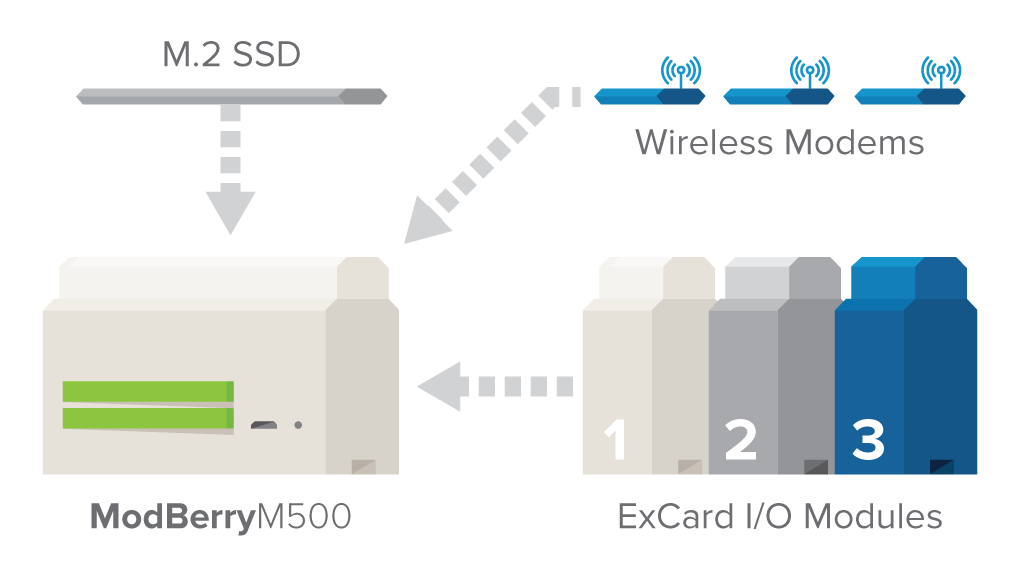
M.2 SSD support for ModBerry M500

Latest software update for Raspberrry Pi 4, now available in beta, makes it possible to boot directly from USB 3.0 connected drive, without the need for an SD card. With a possibility to run the OS directly from SSD is a massive breakthrough, allowing users to improve the performance of the system and data access speed.

ModBerry M500 offers now a feature to include M.2 SSD drive in industrial-grade device. The merge of industrial interfaces and SSD-boosted Raspberry Pi 4 is a perfect solution for on-site data management and gateway application.

ModBerry M500 roadmap for 2020+

Difficult times of coronavirus outbreak in early 2020 changed the expectations for new Industrial IoT devices. Slowed market needed some adjustments to overly expanded devices with reserve of not quite necessary features for different applications – often raising the price of the device.

New addition to ModBerry M series and Industrial IoT Ecosystem offered by TECHBASE Group is the revised ModBerry M500 Lite device, to ensure the full configurability of device’s resources.

ModBerry M500 Lite features:

  • Quad-core ARM Cortex-A72 1.5GHz processor
  • 2/4GB and new 8GB LPDDR4 RAM option
  • SSD M.2 support for mass storage boot
  • Industrial-grade enclosure with DIN-rail mount
  • RTC

ModBerry M500 Lite optional resources:

  • Serial RS232/422/485 ports
  • Digital and Analog I/Os
  • Relays
  • 10/100Mbps Ethernet
  • CAN, 1-Wire
  • M-Bus Master / Slave
  • TPM Security chip
  • OLED 0.96” screen
  • SuperCap UPS

New ModBerry M500 Lite not only is a versatile device with wide array of available optional resources, but also incredible fast with quad 1.5GHz processor, up to 8GB RAM and last but not least, M.2 SSD bootable drive for system, applications and rapid data availability, without the need to bootstrap an SD card. RTC with watchdog option and additional TPM Security chip ensures data safety and breach protection.

Pricing and availability of ModBerry M500 Lite

Price of the device is yet to be specified, but it will be significantly lower than standard ModBerry M500, which can be configured here. Preliminary devices are available to order – please contact our sales department via contact form or Live Chat at https://iiot-shop.com/ to receive a quotation for the configuration needed.